
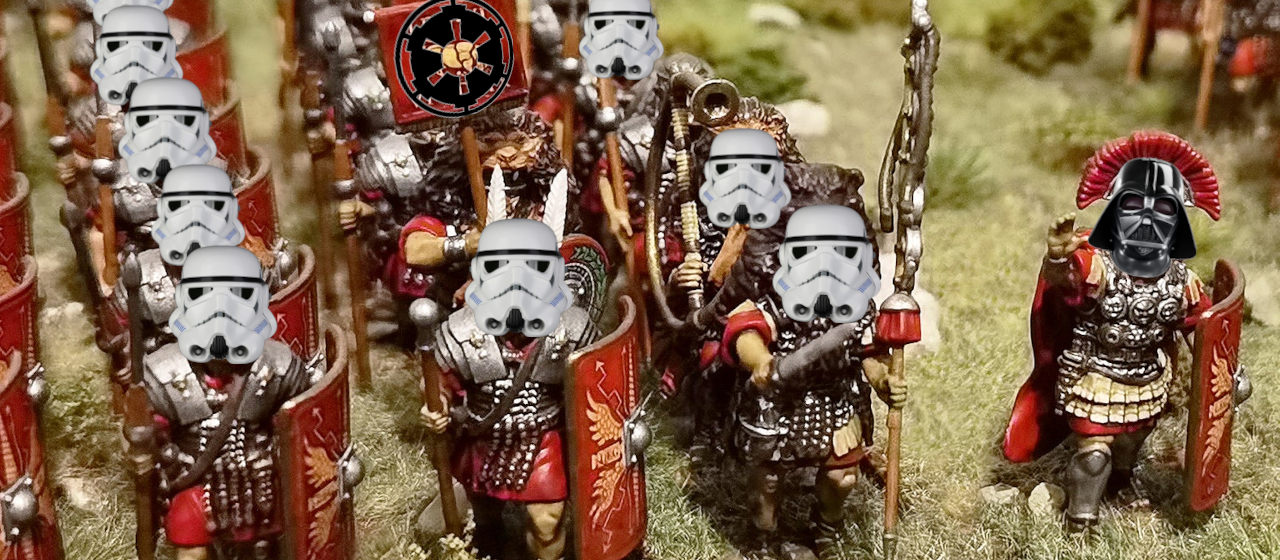
Star Wars hasn’t had much luck with movies lately, and the video game adaptations are a mixed bag. But, surprisingly enough, the miniature wargames are on an upswing! One of multiple such phoenixes arising from plastic ashes is Star Wars: Legion, the 28mm mass combat game from Atomic Mass Games, mostly known for a skirmish game tied to another terrible movie franchise.
Listen to the Fortified Niche episode.
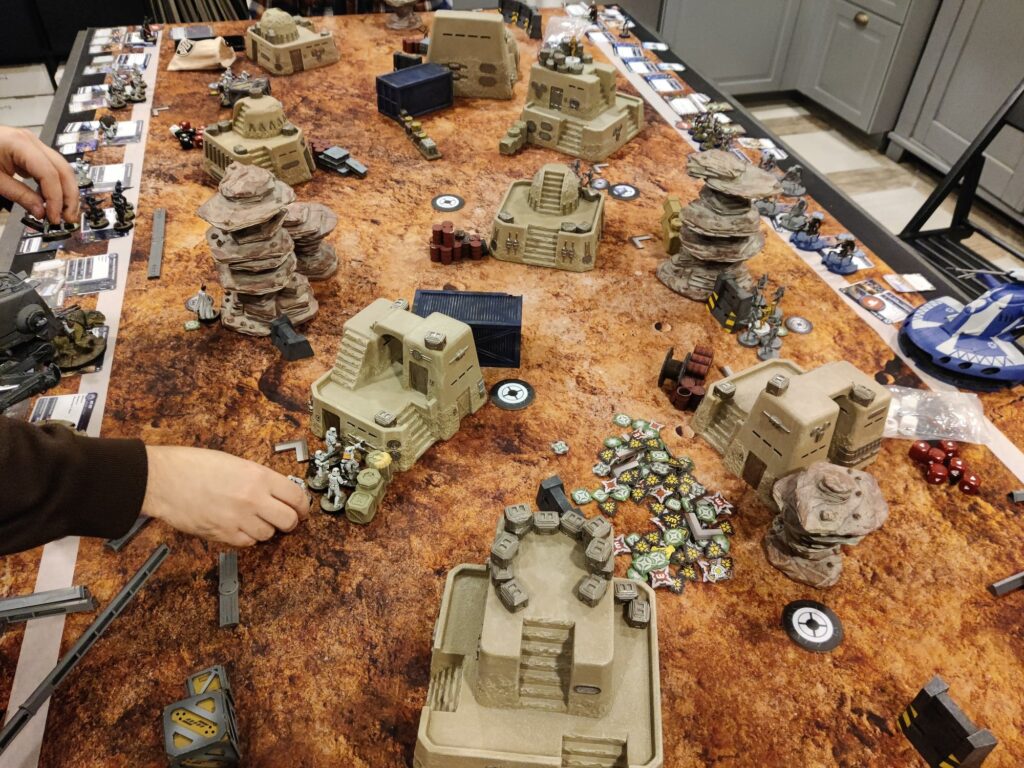
Star Wars: Legion was originally produced by Fantasy Flight Games. As such, it’s a game in love with custom dice and piles of tokens. On the miniature side, it can be played with ~40 miniatures and two large vehicles. The armies in the game cover the original trilogy, the prequels, their related shows, and video games. Mercifully, the taint of the sequels hasn’t seeped in yet.
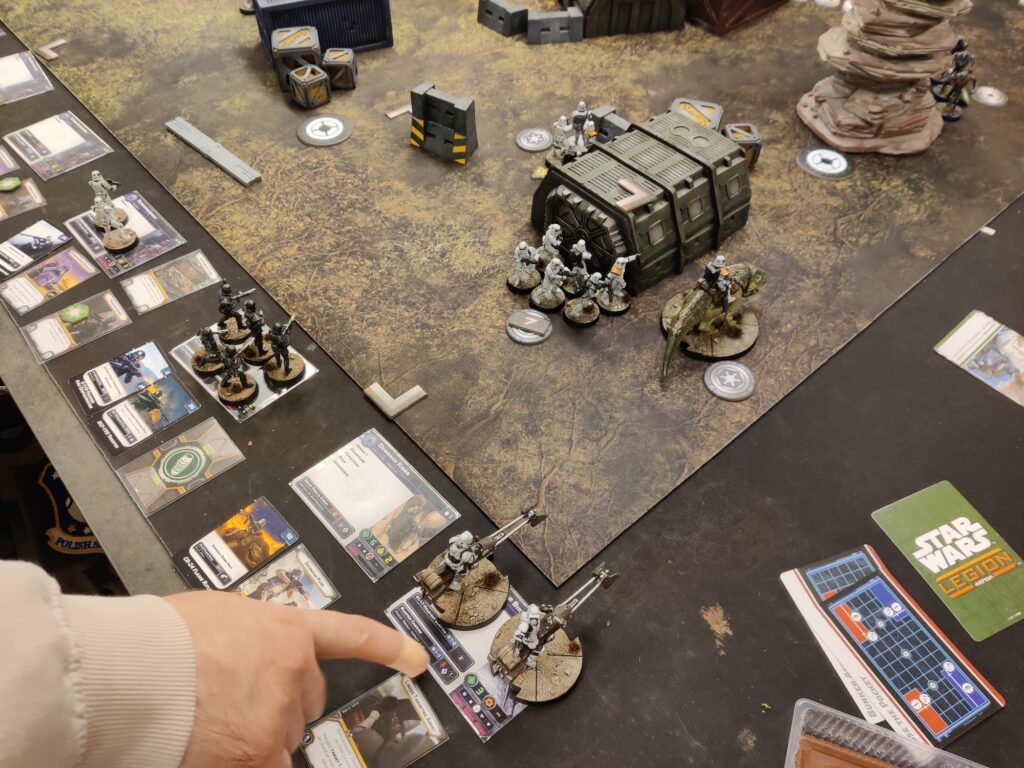
The game’s take on alternating activations is a little difficult to explain, but here I go. Each unit contributes an order token of their class to the pool. Part of those tokens will be assigned to units based on the command card you secretly select at the start of the turn. Initiative is won by the player with the lower value card, getting a lower number of guaranteed activations. Any order token not given out at this point will be put into the player’s pool. So when its your turn to play, you’ll be able to activate one of the units that have their order token on the field, or draw from the pile and hope for the best. So that’s the big tactical decision you’ll make several times a turn.
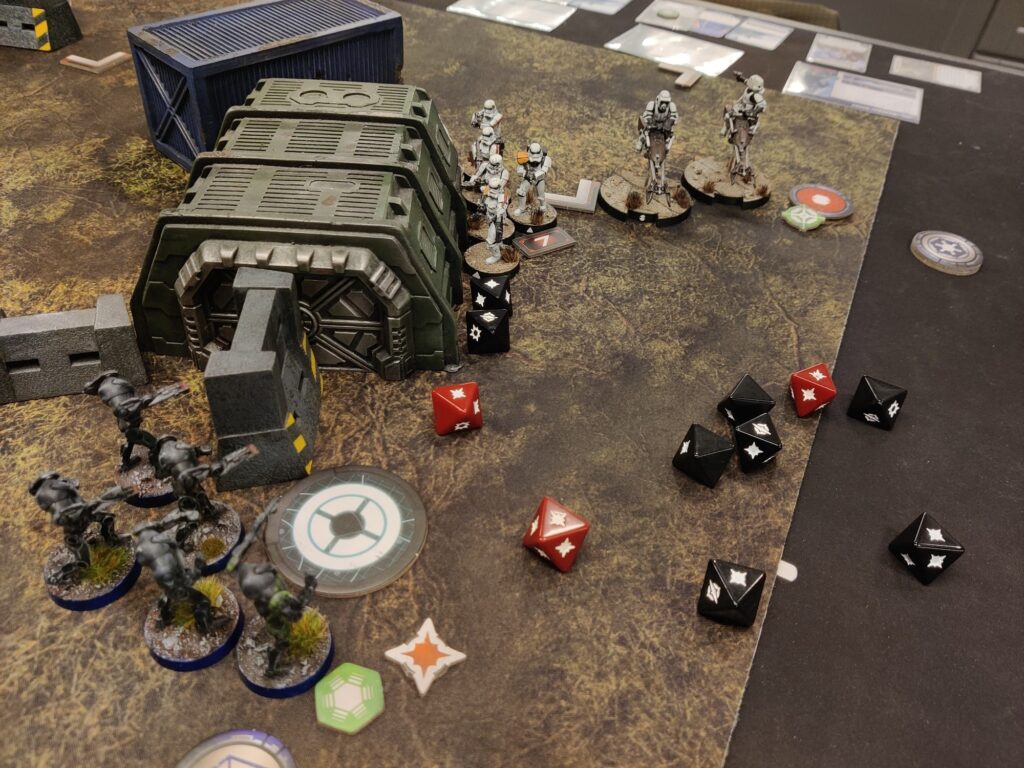
Thankfully, unit activations are somewhat easier to explain. They have two actions, and most of them are what you’d expect: moving, shooting, etc.. You may also spend an action to gain a token or to reduce unit stress and refresh upgrades. Once it comes to actually fighting, you’ll roll color-coded D8s for attack and D6s for defense. Then you may go insane re-rolling them as a result of token expenditure, which may involve re-rolling re-rolls. Some of the dice results are called surge results, and they only count if the unit’s statline allows it (or you have surge tokens). For example, the lads have calculated that a red defense dice equals a 4+ save, but a red defense + surge is a 3+.
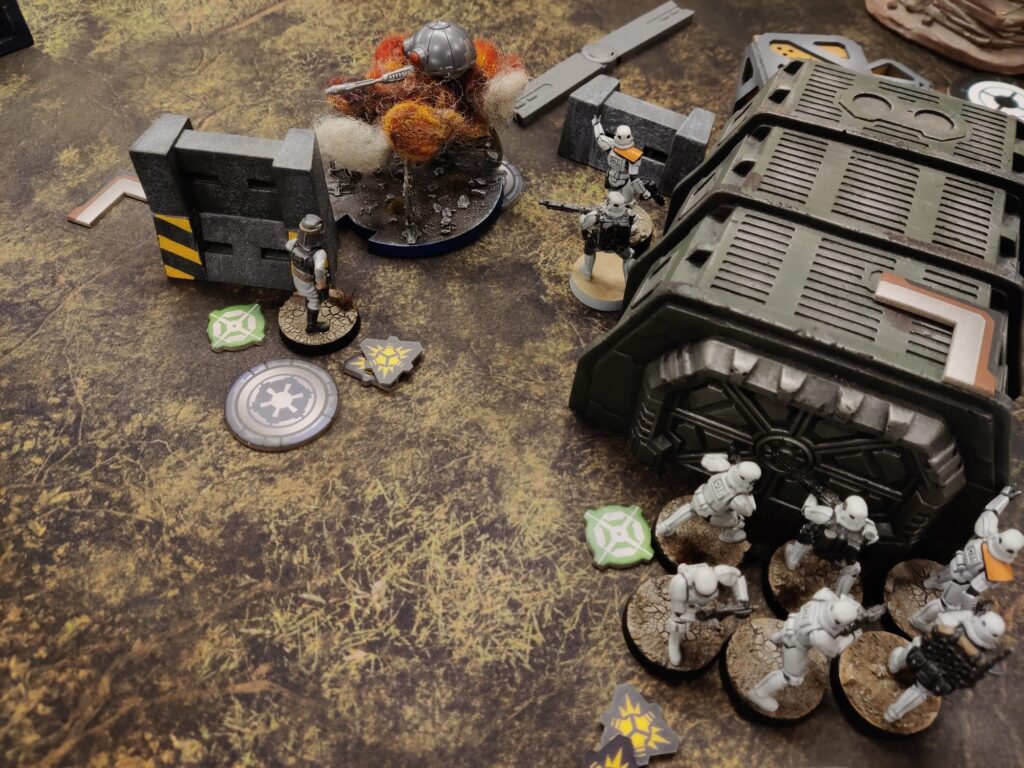
But while the basic unit stats are covered by various symbols on the card, they’re made really special by special rules. Regular corps units like Stormtroopers, Clones or B1 droids may have to make do with a single rule per. More special units, like ARC Troopers, may have half-a-dozen, increasing their attack capability, mobility, and so on. Of paramount importance are rules that allow units to activate other friendly units, which allows you (especially if you’re a filthy CIS player) to manipulate the activation system to your favor.
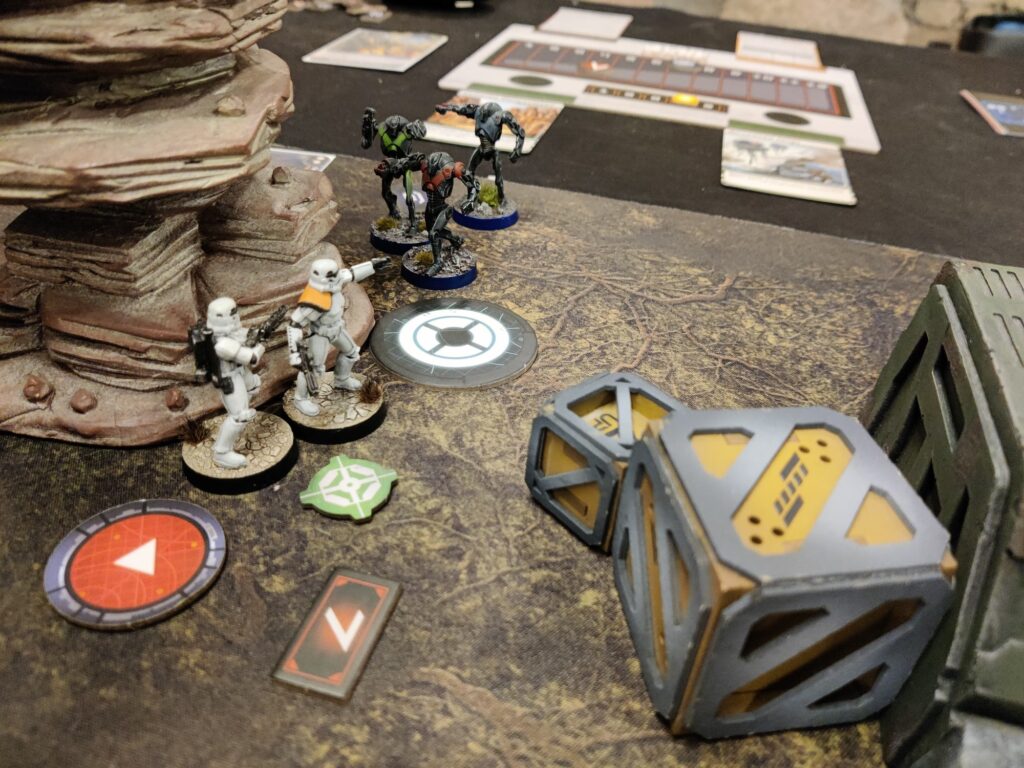
Now, my big complaint with Star Wars: Legion is that it feels like morale (Stress) doesn’t matter. Units usually have a Stress limit of two, and they take one Stress token every time they get shot at. So you’d think units would get pinned and panicked instantly. That’s not exactly the case; you automatically lose one Stress at the end of the turn, and as a unit activates, it rolls to lose Stress tokens for free. That and troopers die too fast for Stress (and it’s action-sapping effects) to matter.
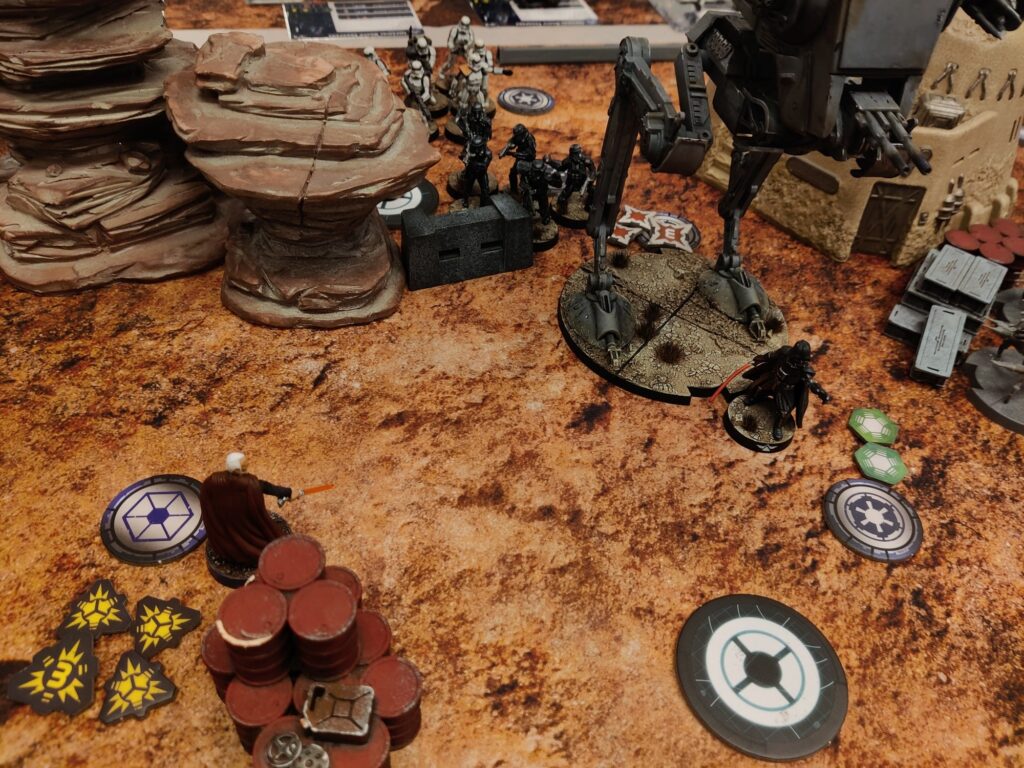
Oof, but that’s all about the gameplay. There’s a lot more to talk about the army building. Star Wars: Legion is a game reliant heavily on combos and synergies. And army building is where you give units the special weapons (which confer their keywords to the entire unit’s attacks) and upgrades make them slot into a specific strategy. It may feel overwhelming at first, but it gets exciting really fast, especially since you’re also building the activation card deck (characters bring their own special ones) and the random cards that construct your scenario. Here’s the last list I built before recording the episode.
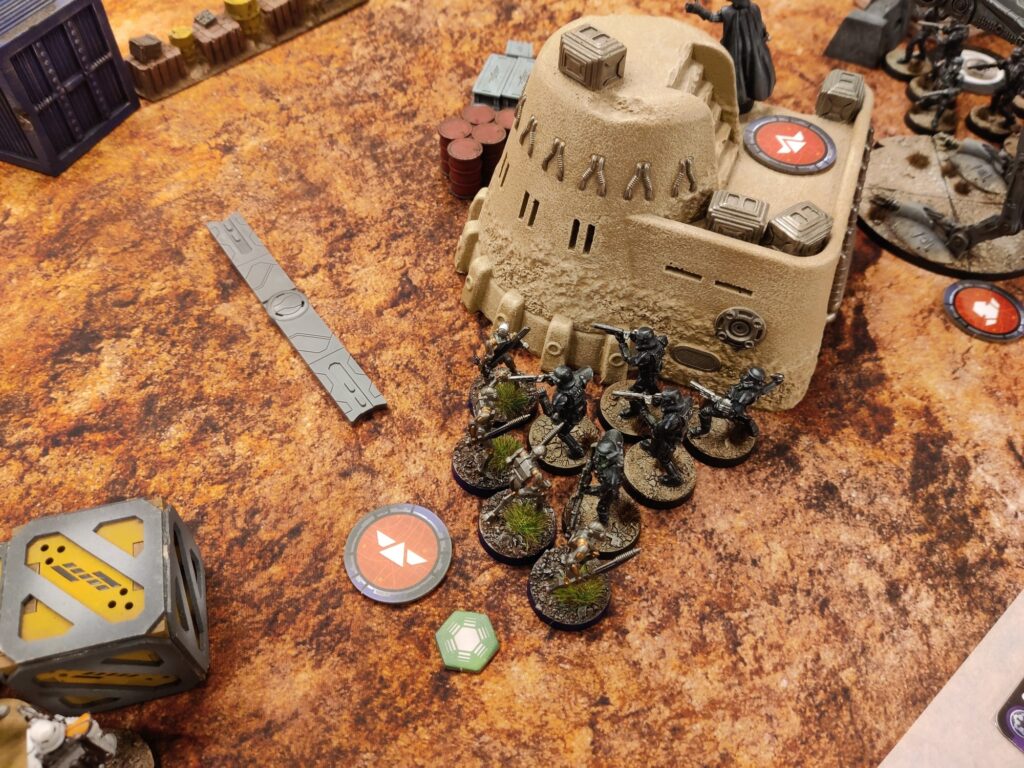
In conclusion, Star Wars: Legion is not a difficult game to play, but a hard to explain succinctly. For a mass battle game, it plays fast enough. More than that, it collects fast enough as well. But even those starters being dangerous value is only part of the reason why I’ve spent so many hours building armies of clones!