
Have you heard of these peculiar plastic bricks that the Danes have made? They are called “Lego” and you can use them to both erect structures and craft engines, and create whole worlds for miniature plastic figurines to inhabit. And what, pray tell, would happen if such a plastic brick game was inspired by Japanese woodcuts of fights in giant armored suits – or even space-faring vessels? Why, you would get Mobile Frame Zero* and its kin, Mobile Frame Zero: Intercept Orbit!
Listen to the Fortified Niche episode.
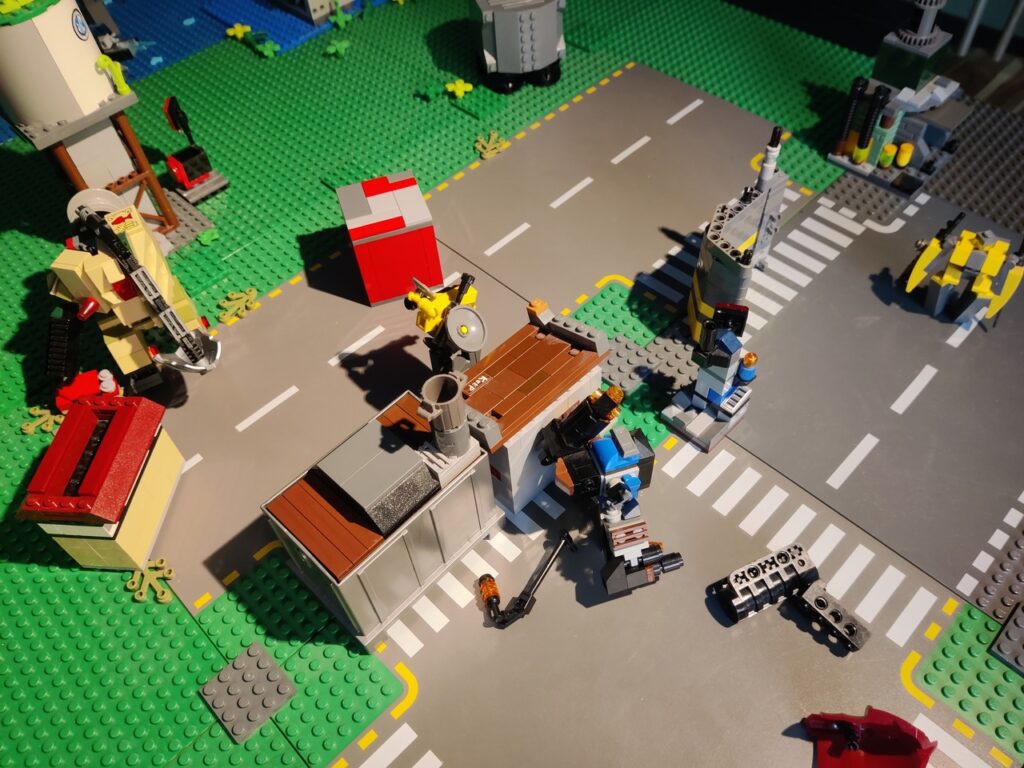
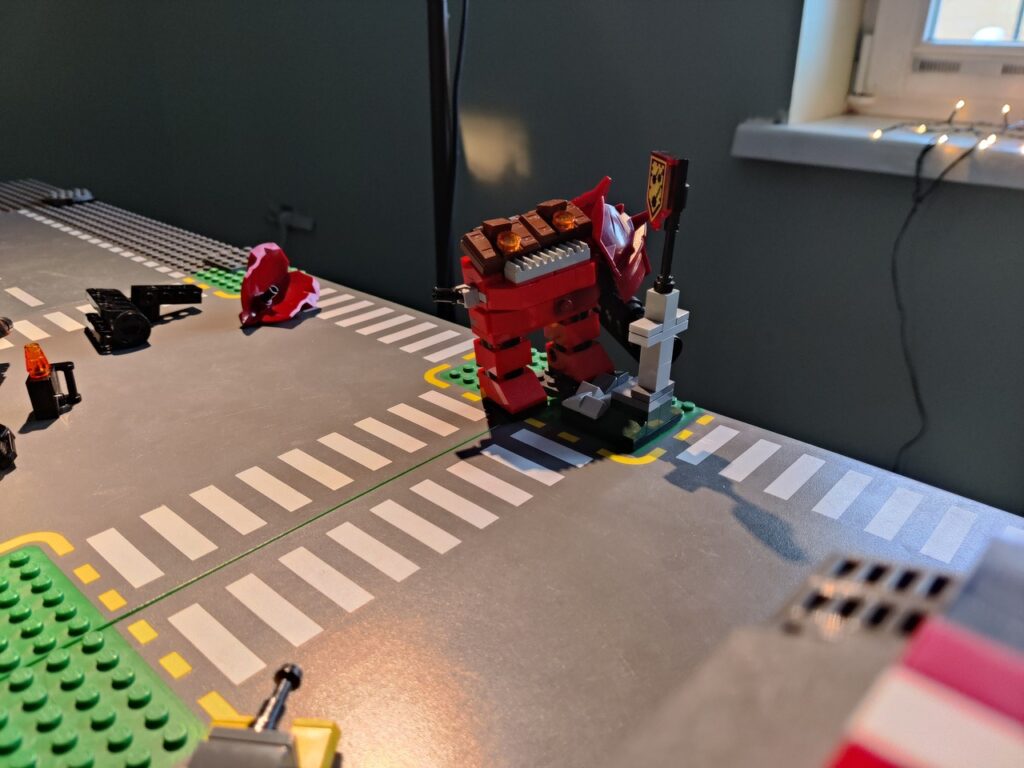
As you may have gathered from inexplicable intro, we’re discussing two related Lego-based rulesets: Mobile Frame Zero and MFZ: Intercept Orbit. The idea is for you to build either a bunch of Lego mecha – or Lego space ships and accompanying very small Lego mecha – and FIGHT! Actually, the games assume multiplayer by default, so I you can split the brick-purchasing load among several friends.
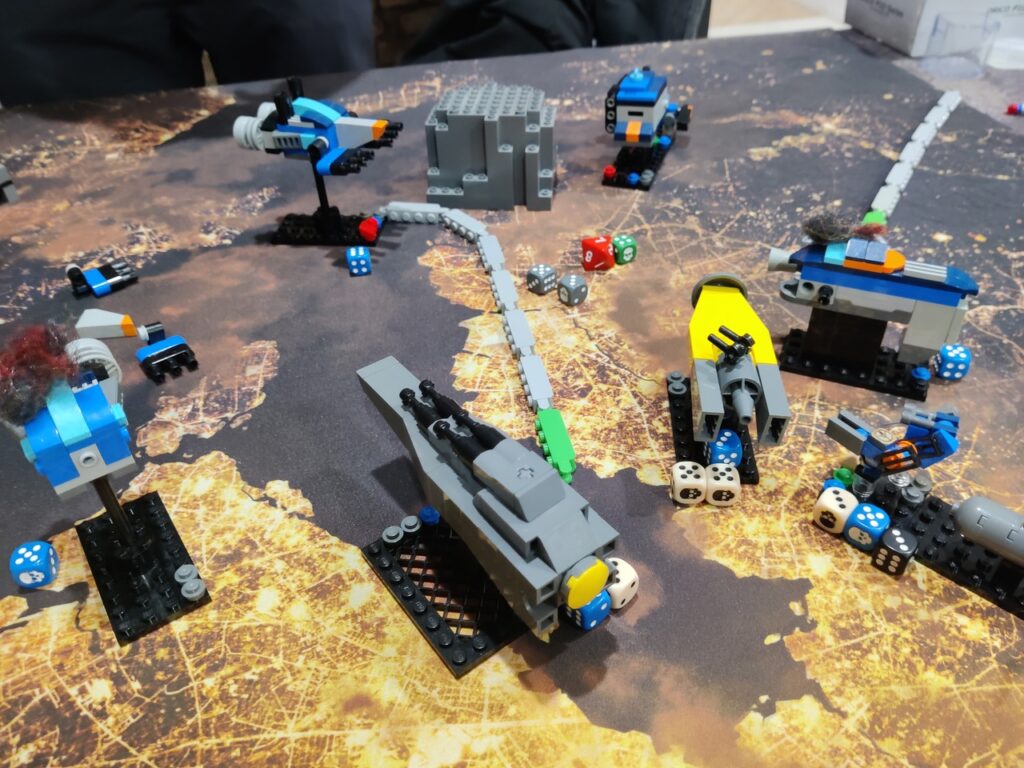
Both games have similar basics: scaleable distance measuring units, dice pools, comparing dice results. For your forces, you have a collection of frames/ships and stations. The former are what you control, the latter are objectives to fight over. Players alternate activating their units; once activate, you say what the unit will do, then roll their die. How many and of what dice you’ll roll depends on the unit’s systems. Since you’ll only be using one die result per system, more dice just increase the odds of rolling high.
This is where Mobile Frame Zero gets a little funky. You need to compare your attack roll to the enemy defense roll to see if you can (roll to) damage the unit. But a unit that has yet to activate doesn’t have a defense roll yet. So that unit then has to activate, declare attack, and roll defense. After the first unit resolves their turn, the targeted unit will do theirs. And if it chose to target another unit instead of firing back, it can force yet another activation. This can daisy-chain potentially to the entire table. More likely, you’ll use this to make the enemy activate certain units earlier than they would like.
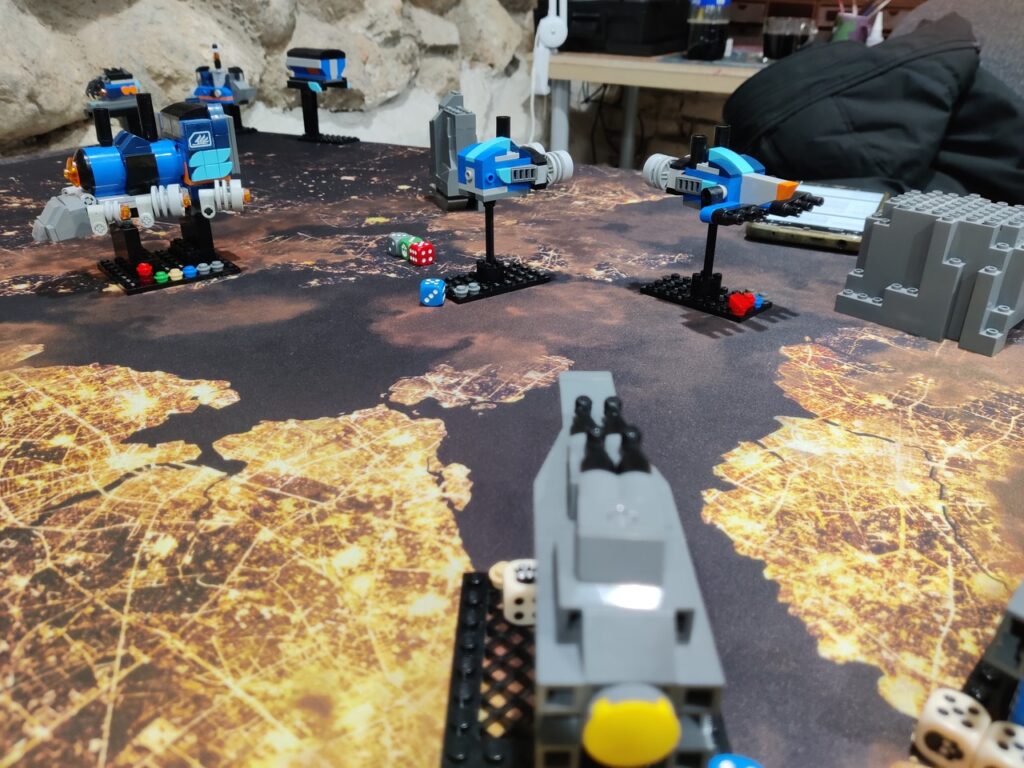
And once you score any damage, the target’s controlling player gets to pick what system(s) is lost (and, preferably, taken off the model). Generally, it makes sense to lose anything but the attack systems, especially since white system die are generic and can be used for any system. Even a ship or a frame without any systems gets the system dice (until it loses those), so it is still capable of limited action.
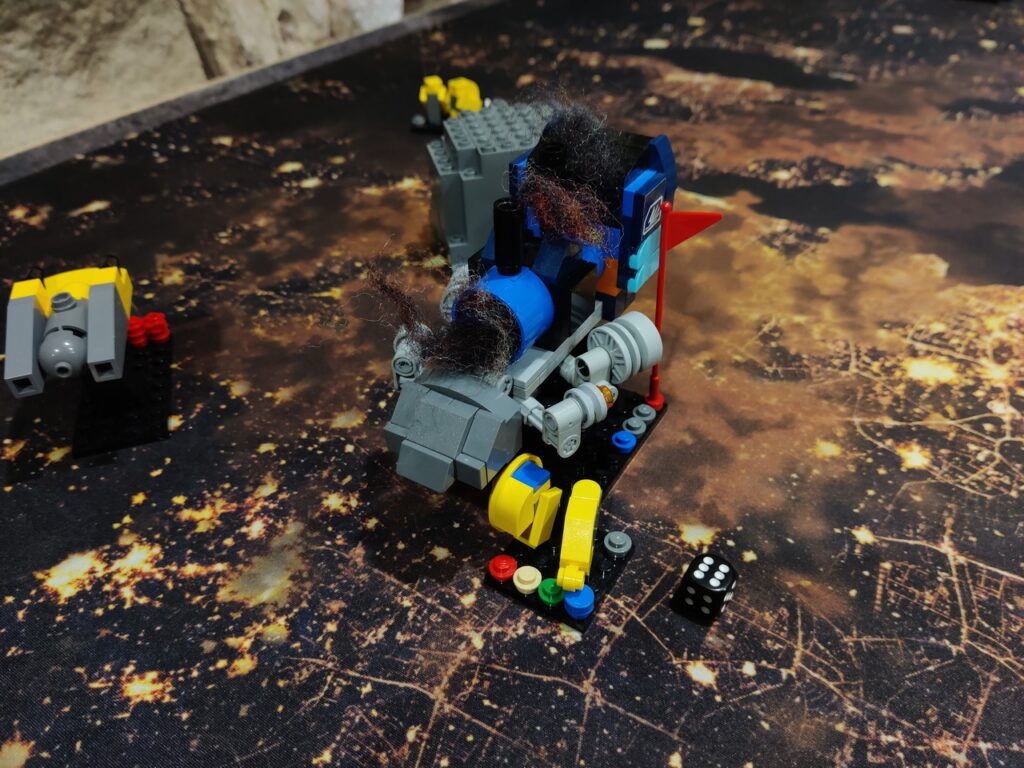
Now, what systems units have is decided in the army building phase. Mechs and ships have four slots, and you can double up on a system for additional benefits. For example, double attack system rolls not just two red d6s, but also a red d8. There are other, non-dice size benefits as well, like double sensors giving you infinite spotting (read: increases hits for the next attack against the spotted unit) range. But even one-system effects are always meaningful. It’s just that in the heat of battle, being able to kill better matters more.
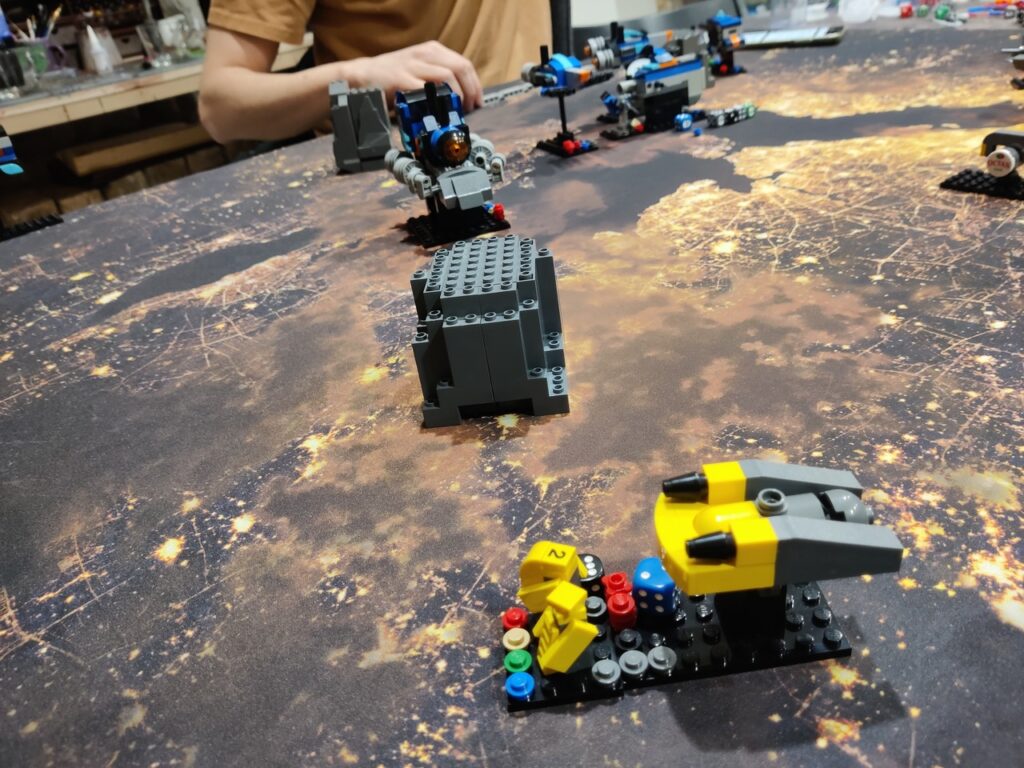
With all the stuff I mentioned before, Intercept Orbit is more complex and interesting. For starters, there are two ship classes: four-system cruisers and three-system-yet-more-maneuverable frigates. The mobile frame companies are a class unto themselves: they have one of each base system, but one company can also be a slightly game-breaking ace. Ships may repair lost systems. Mobile frame companies need to keep track of their fuel, but can also capture ships. Meanwhile, ships themselves have innertia, and their movement dice can be spent for boosting, breaking, and turning. It’s a more interesting game in all ways.
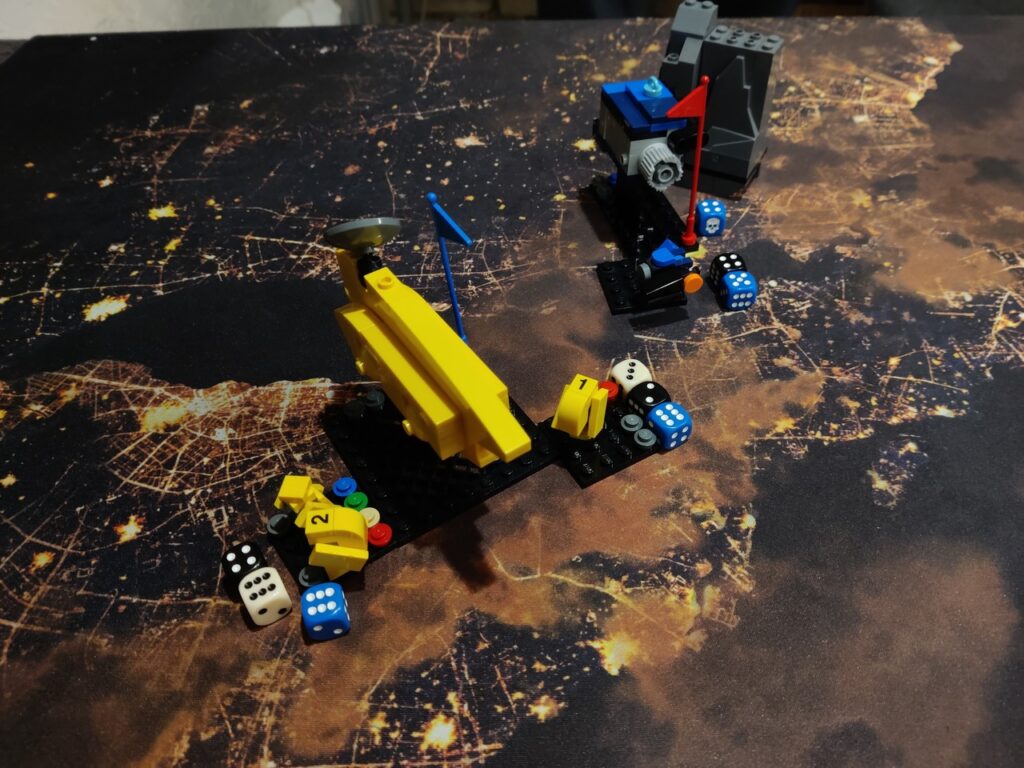
In conclusion, Mobile Frame Zero and Mobile Frame Zero: Intercept Orbit are neat little games for Lego-havers. MFZ is a good way to introduce children into miniature wargaming, but is otherwise somewhat basic. Intercept Orbit, however, can stand on its own as a space ship and mecha battle game. Now, if only I had space games to compare it with that weren’t Battlefleet Gothic…
*Technically Mobile Frame Zero: Rapid Attack