
What if game rules were under thirty pages? That’s not sole privilege of OPR, you know. In this installment of This Came From The FLGS podcasting, I review zine-sized skirmish games: Space Weirdos for sci-fi gun-havers, and its more mature evolution Sword Weirdos for fantasy!
Listen to the Fortified Niche episode.
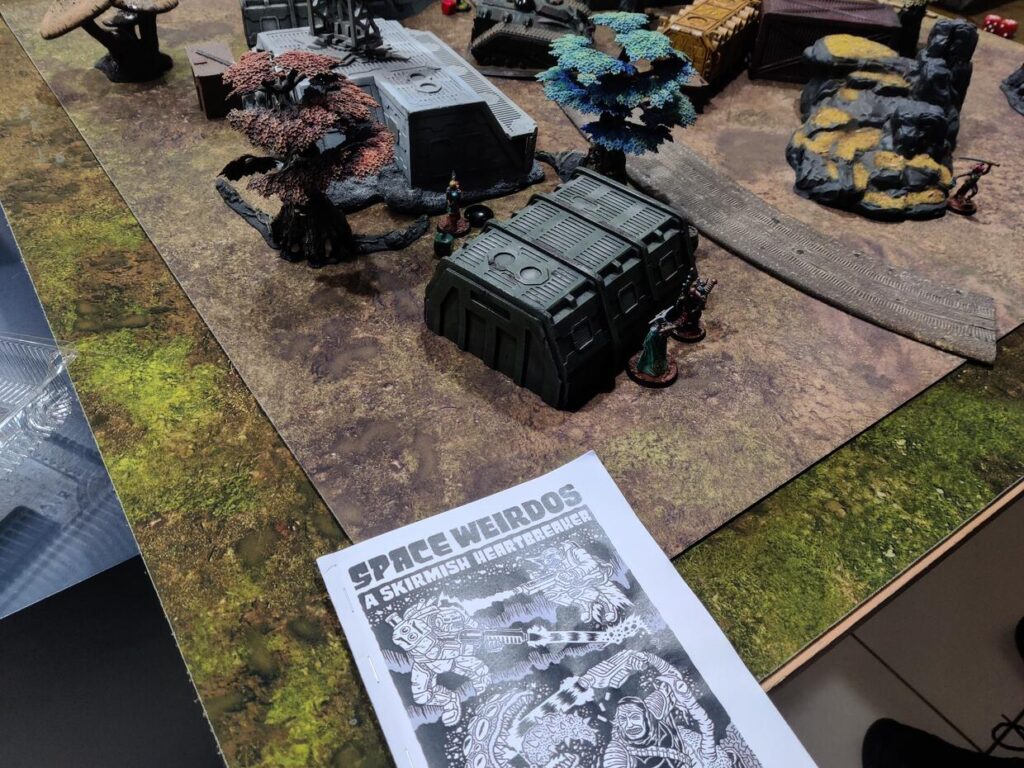
Space Weirdos and Sword Weirdos share not only the author and naming convention, but also much of the same mechanics. All the distances are measured in five-inch sticks. The stats are described in dice sizes and nearly all rolls are two-dice roll offs. The one big exception are the injury tables, which are just a 2d6 roll with modifiers based on the difference between the preceding attack/defense roll off.
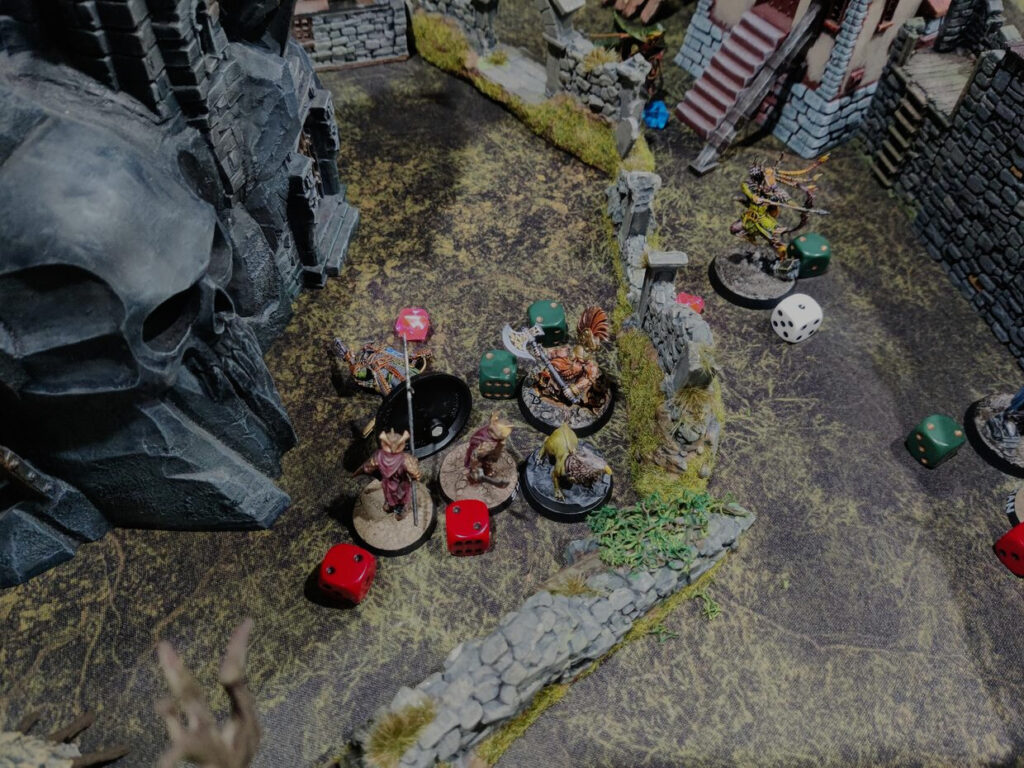
Those are the only static target numbers that exist – even when a roll is not opposed by another character, your opponent rolls 2d6 “for the universe”. I like the uncertainty that it brings to what could otherwise be scenario tasks or spell powers the player would be able to no-sell via character building. It reminded me a little of Pulp Alley’s mutable objective tests.
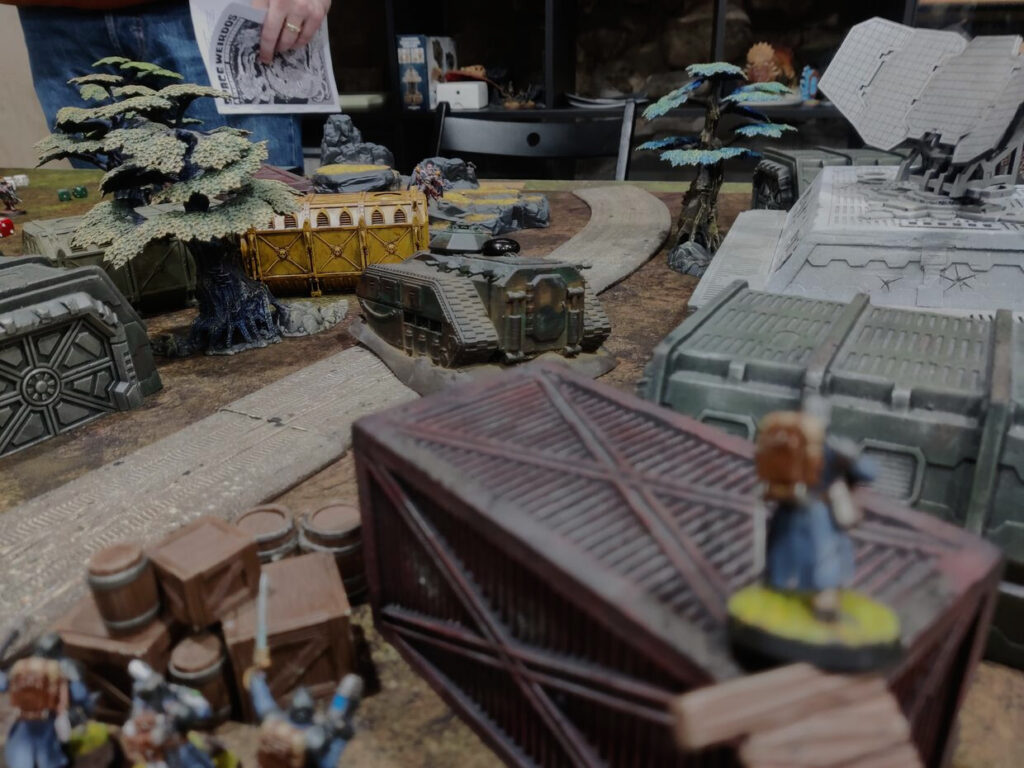
Each turn in Sword Weirdos (or Space Weirdos) begins with an initiative roll-off, and the winner gets to activate the first mini. Each guy gets three actions, which can be used to:
- Move up their speed move in straight sticks (so speed is also maneuverability).
- Attack (Sword Weirdos has the tremendous improvement of limiting attacks to one per weapon per turn)
- Interact/do magic/etc.
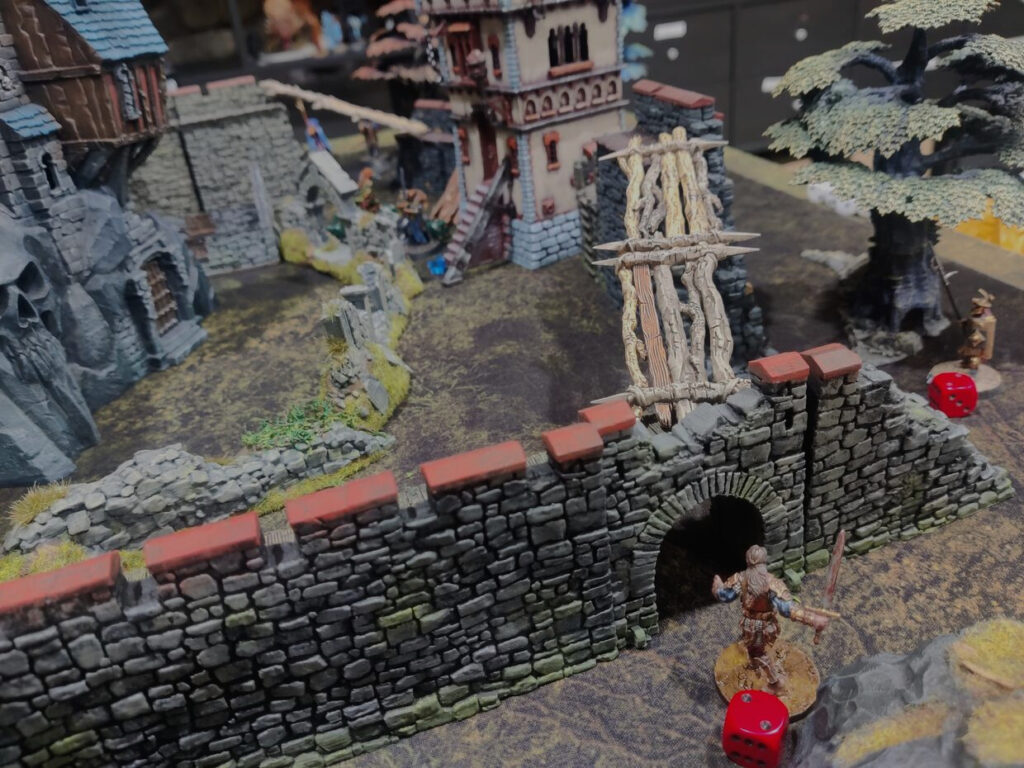
Two things may complicate this: maneuvers and low results on injury rolls. Maneuvers use “command points” that you get 3/4 per turn based on game size. In both games, they can be used to increase a model’s speed stat or, if you have any left over at the end of the turn, increase your initiative dice size.
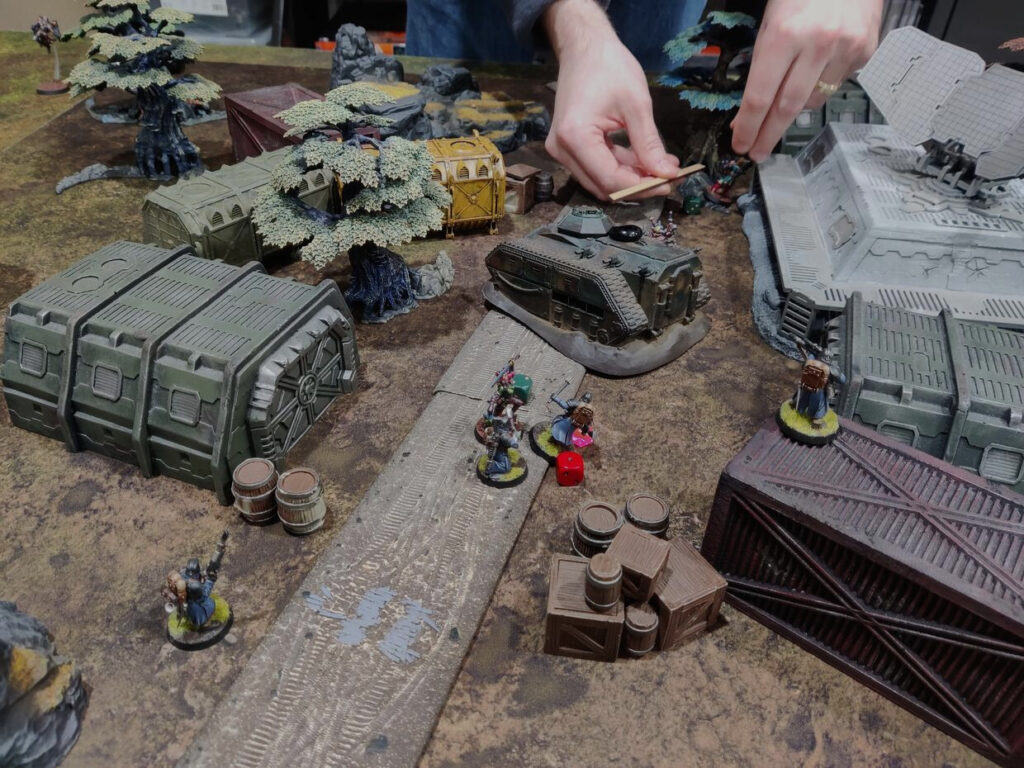
In Space Weirdos, maneuvers can attack first in melee, carry out overwatch, no-sell attacks with Dodge movement, etc.. It doesn’t feel great. In Sword Weirdos, they are used mainly to activate weapon and class abilities, which is a lot cooler, and gives you a lot more to think about.
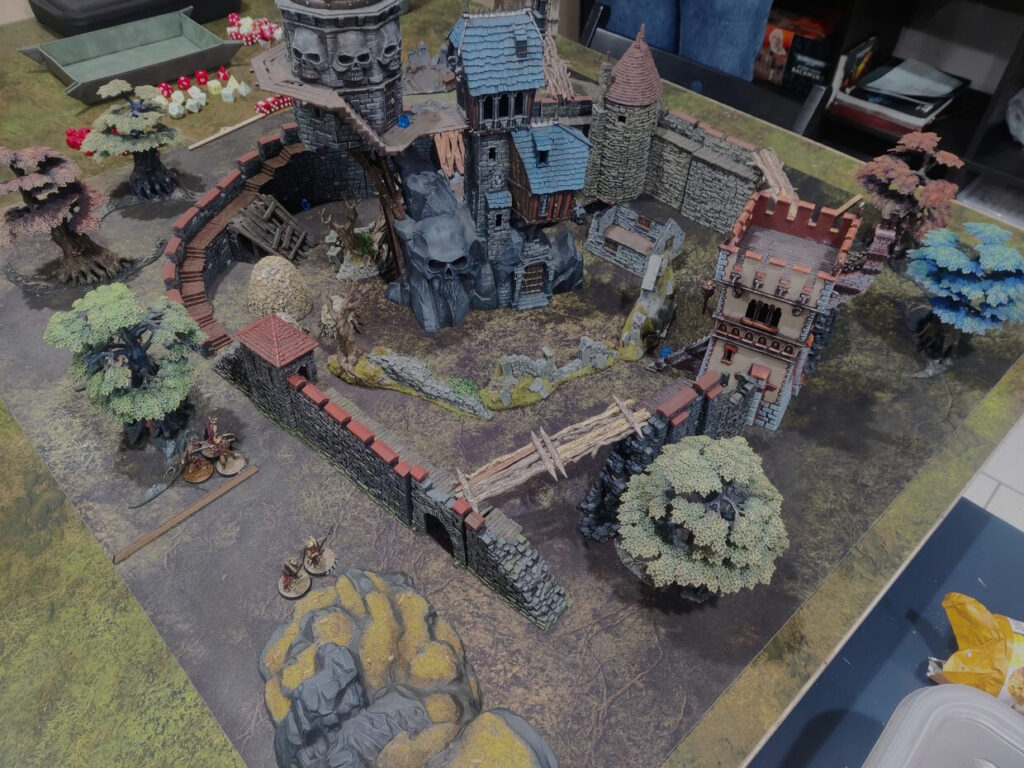
Sword Weirdos is also better when it comes to army building, with a more fleshed out system of unit classes, access to weapon types, and, well, weapons. In fact, it blows Space Weirdos warband building completely out of the water.
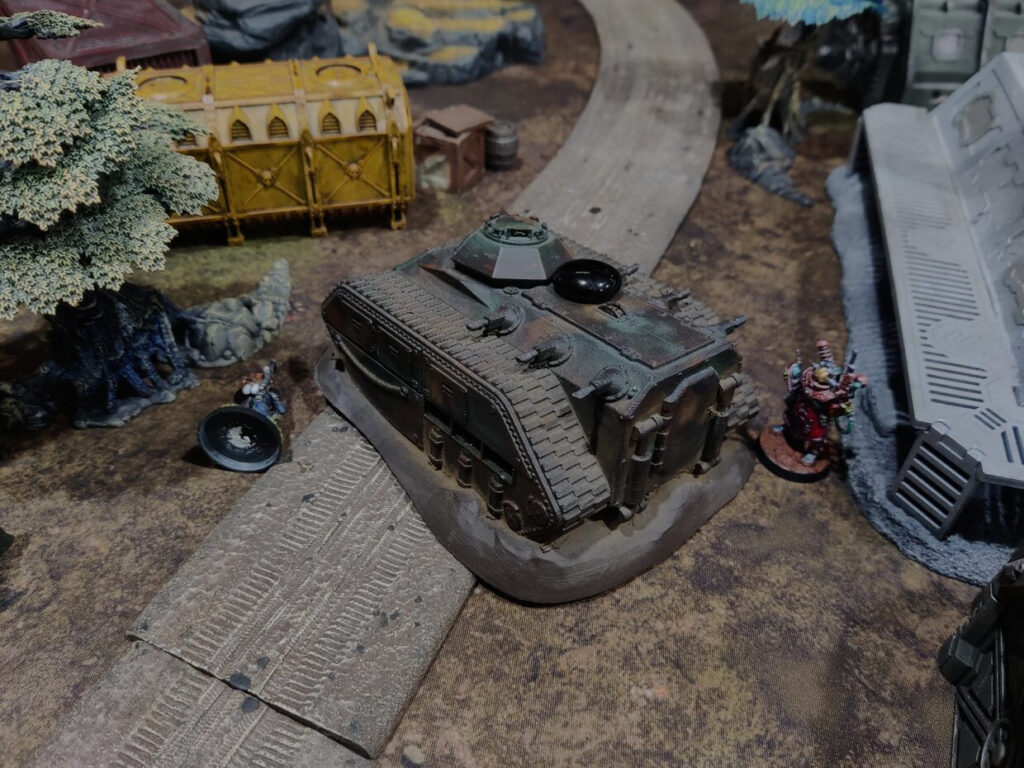
In conclusion, Space Weirdos is a game to play if Rogue Planet is too weird for you. But Sword Weirdos is a legitimate good game that can stand on its own. The guys at the FLGS are already backporting the good features into the sci-fi predecessor.