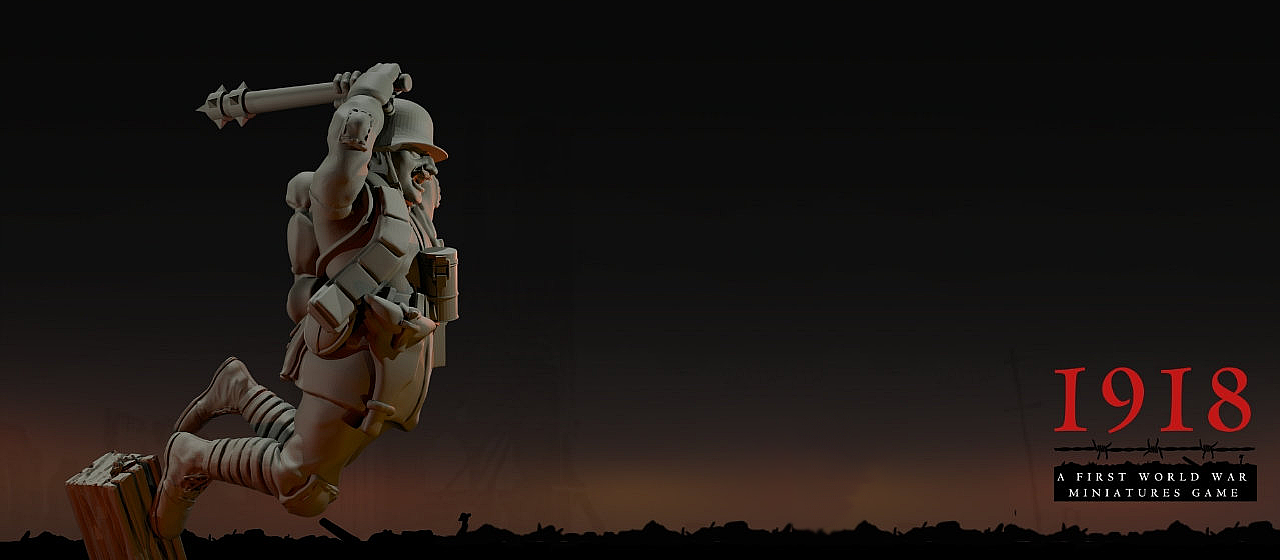
World War I, baby! Without it, wargamers wouldn’t have their perennial favorite, World War II. However, they are loathe to give the original due deference. Luckily, maybe inspired by the relatively-recent centennial, Great War games keep coming out. Of them, 1918 is one of the latest. So take your platoon and command it during the last year of the war to define all wars.
Listen to the Fortified Niche episode.
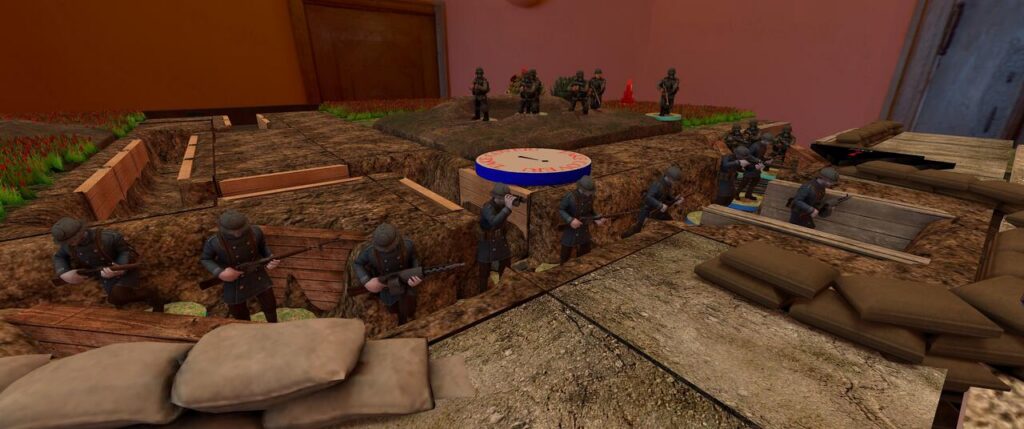
It’s 1918 [the year]! The Yanks are coming, so the Germans launch some of the last offensives in effort to deliver a knockout blow that would win the war. It goes well until it doesn’t, and the rest is history. For wargamers, this is the chance to play the Great War at its most advanced stage. The stalemate of the trenches would be broken by combined arms doctrines that would lay down the foundations of the next century of warfare. Or, as Dolce said after seeing the platoon structures, “damn, this is just like World War II!.”
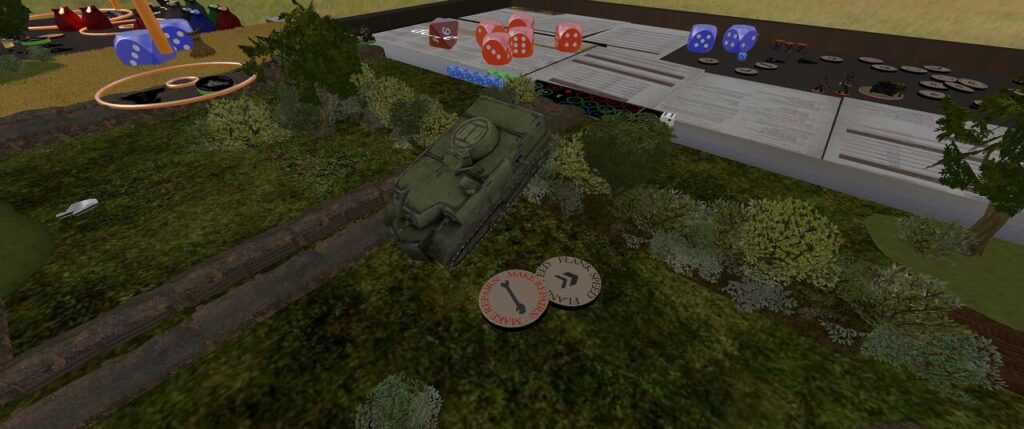
Before you start seeing how good you are at shooting the Boche in 1918, you need to order your troops. So the players alternate secretly giving orders to their units. Orders define what the unit will do once activated, almost always allowing some shooting. Those next to an officer are likely to receive one automatically. Those outside the range of getting shouted at need to roll a test. Anyone who fails gets a Stance instead – much less versatile or powerful than order, but still not nothing.
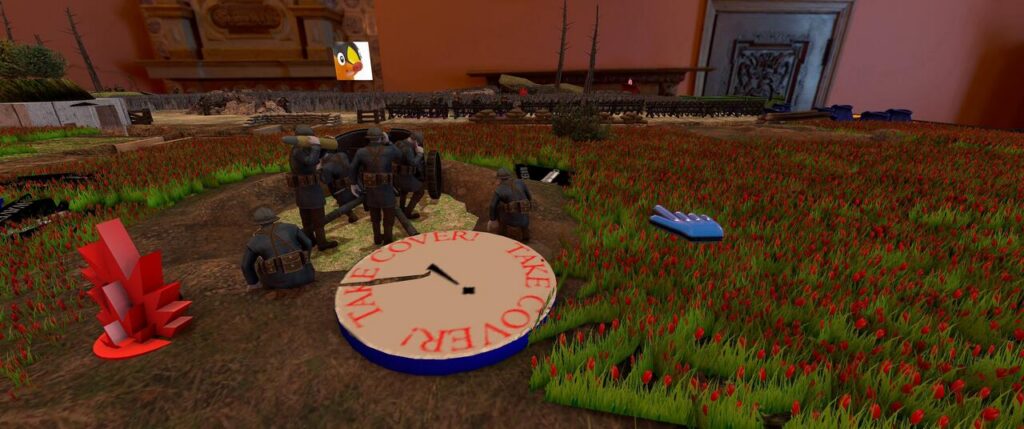
And that’s it! Once the turn starts, players alternate flipping the Orders up and carrying out actions with their soldiers. Notably, units with Stances are activated after the ones with orders; otherwise, a unit failing Orders would just be a boon in terms of activation sequence. In contrast, movement and fighting are fairly easy; no complicated spotting or rolling to wound.
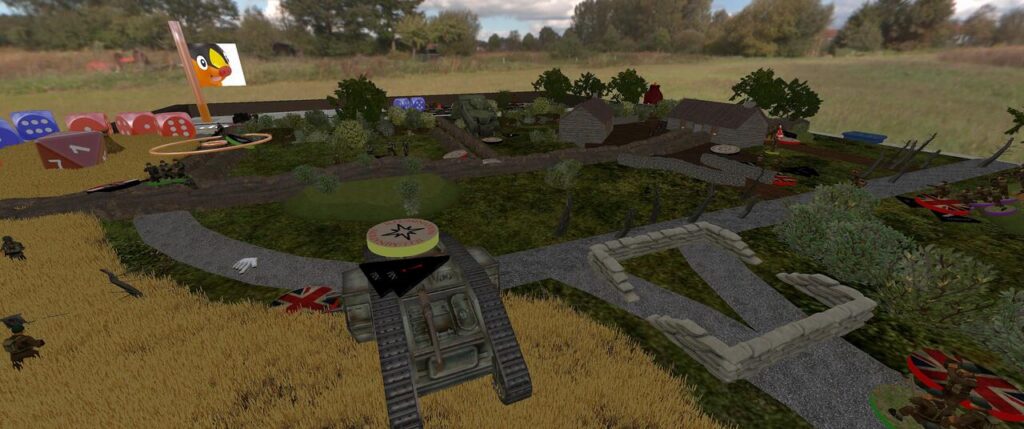
But that’s a deceptively simple description of playing 1918. Because before giving orders to units, you roll dice to get dice results to use with your dugout board. To simplify, it’s a SAGA board in the trenches. And just like in SAGA, those dice-driven abilities can be really powerful, sometimes allowing units to get an Order, act on it, and still remain ready to act on it again in the action phase.
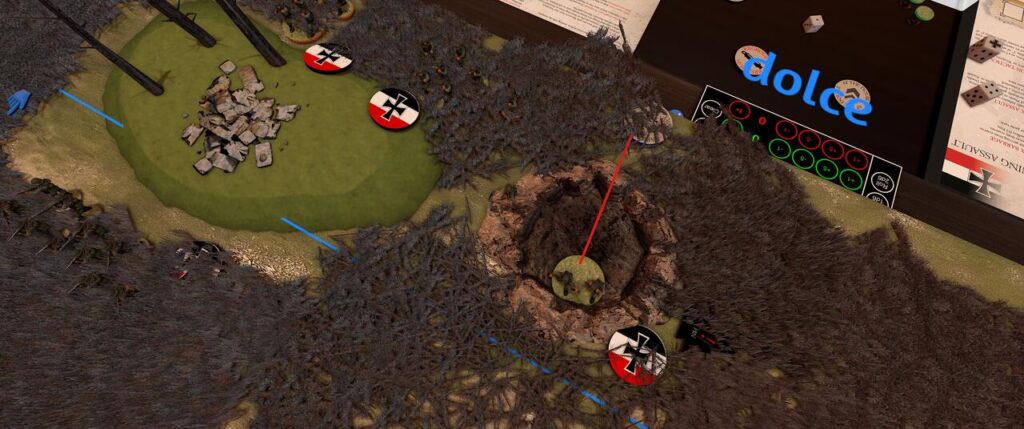
And half of that board is dedicated to officer abilities. Often messing with activation and Order allocation, they’re just one part of what makes officers – specifically the independently-minded senior officers – weird in 1918. To me, the biggest surprise was their mobility, with an officer being able to move in the command phase, then by themselves in the activation phase, and then also tag along with any unit it joined.
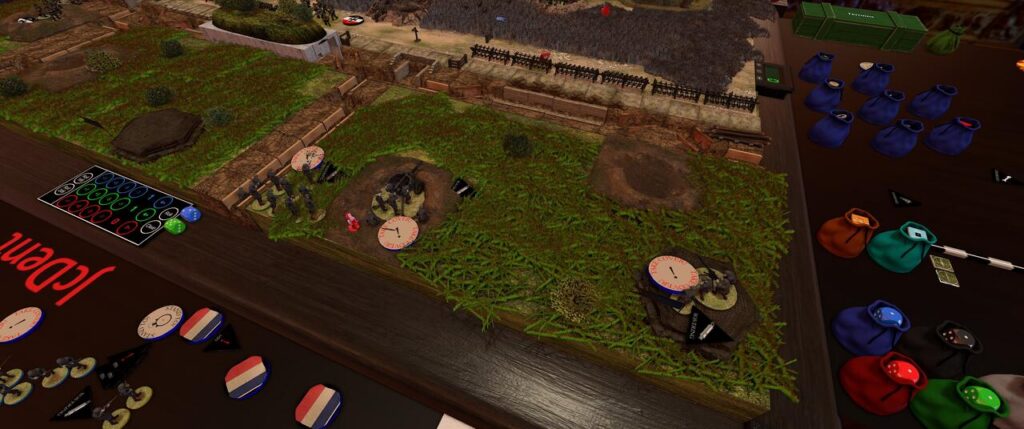
But I can’t spend this blog-type review-thing just talking about the good and the interesting parts of 1918. That’s because there’s also the bad:
- There are so many interconnected rules and dozens of universal special rules. They’re not always well laid-out or written in a way that’s easy to understand. Some USRs are even nested.
- Units often have their own special rules, but their weapons also have their own statlines that may also have special rules. So if you take QF 13pdr Field Gun Team, the statline will tell you what ammunition the unit can use, but then you have to flip to the weapon sheet to check the range, ROF, etc. of the QF 13pdr Field Gun.
- You already need tokens for Orders and/or Stances, pinning level, gasmask use, etc.. Our practice has shown that even that’s not enough tokens for everything you’d want to track.
- 28mm tables are too cramped for what 1918 wants to do.
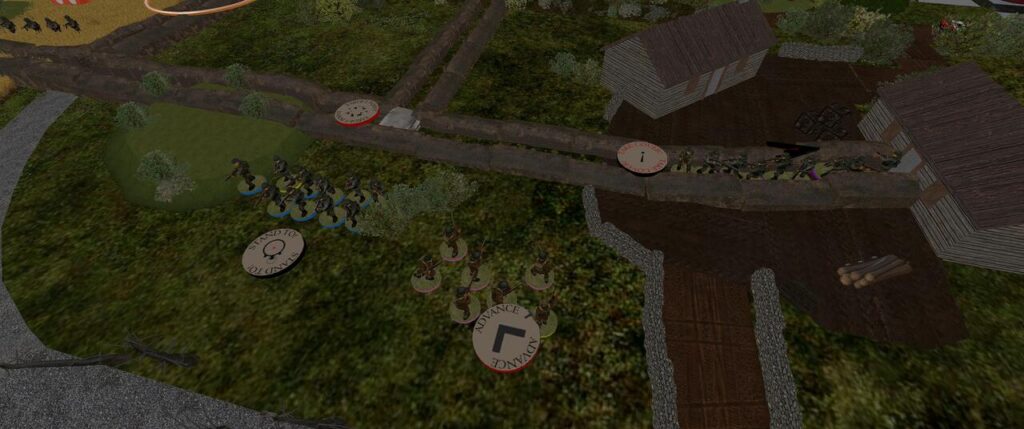
All in all, 1918 did not blow my socks off, but it is a World War I game I would play. It would be a lot better if the game had an FAQ or a serious rewrite of the rulebook to make it easier to understand. And who knows, maybe I’ll get to play it again after stumbling into a great deal for Flames of War: Great War miniatures.