On this episode of this indie miniature wargame podcast, we analyze a game I had sitting on my shelf for years. Hard to believe that something like this could happen to a World War 2 title focused on Stalingrad, but it did! Can we find the reason why we didn’t review Heroes of Stalingrad sooner?
Listen to the Fortified Niche episode.
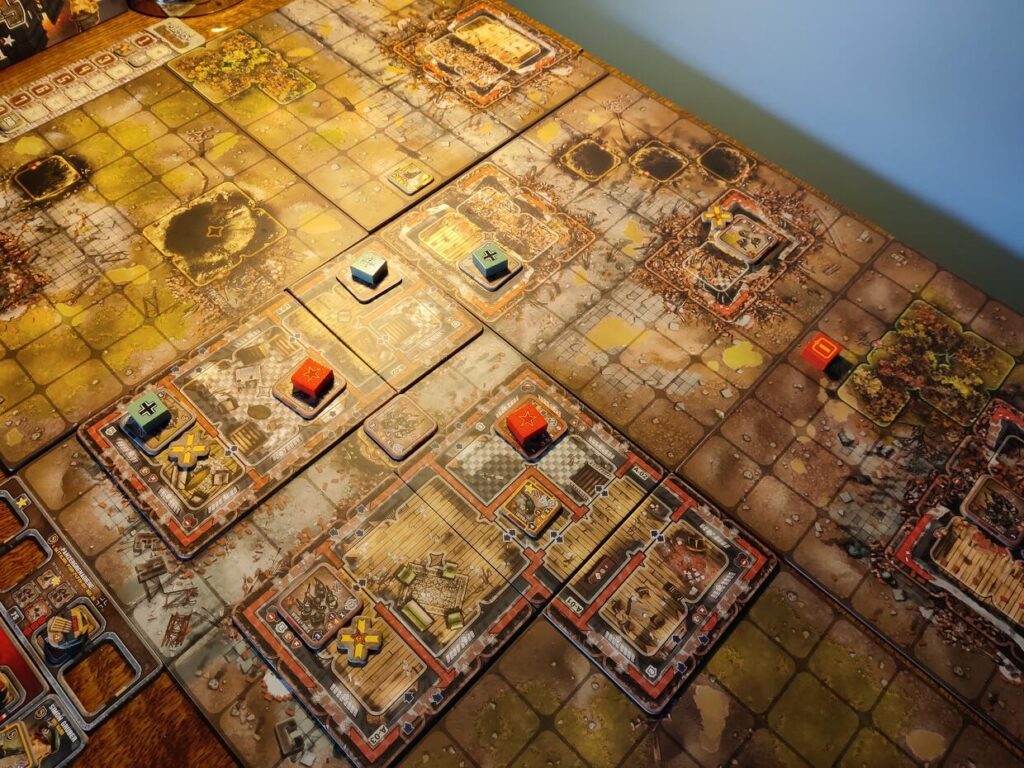
Heroes of Stalingrad is a wargame from the Heroes of… series from the late Devil Pig Games. You may have heard of such entries like Heroes of Normandy and Heroes of the Black Reach. There’s even an Achtung! Cthulhu version because nothing remains untouched by the marketing pull of the Mythos. But Stalingrad is just that: a game about fighting in that damned city.
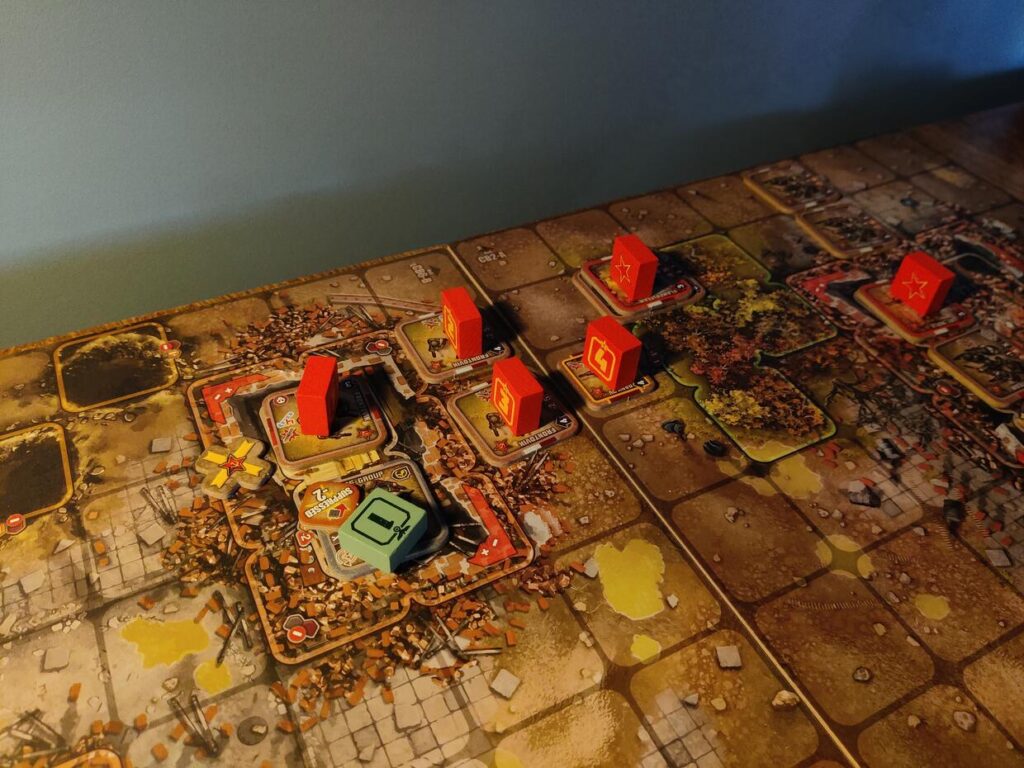
Heroes of Stalingrad works on a simple alternating activation system. Initiative switches each turn, and then players alternate activating units. However, there’s a twist: you have fewer orders than units – and you can lose even those. Moreover, you assign the order of activation secretly before the round the begins by placing numbered blocks on units. There’s even a single bluff block to trick the opponent with.
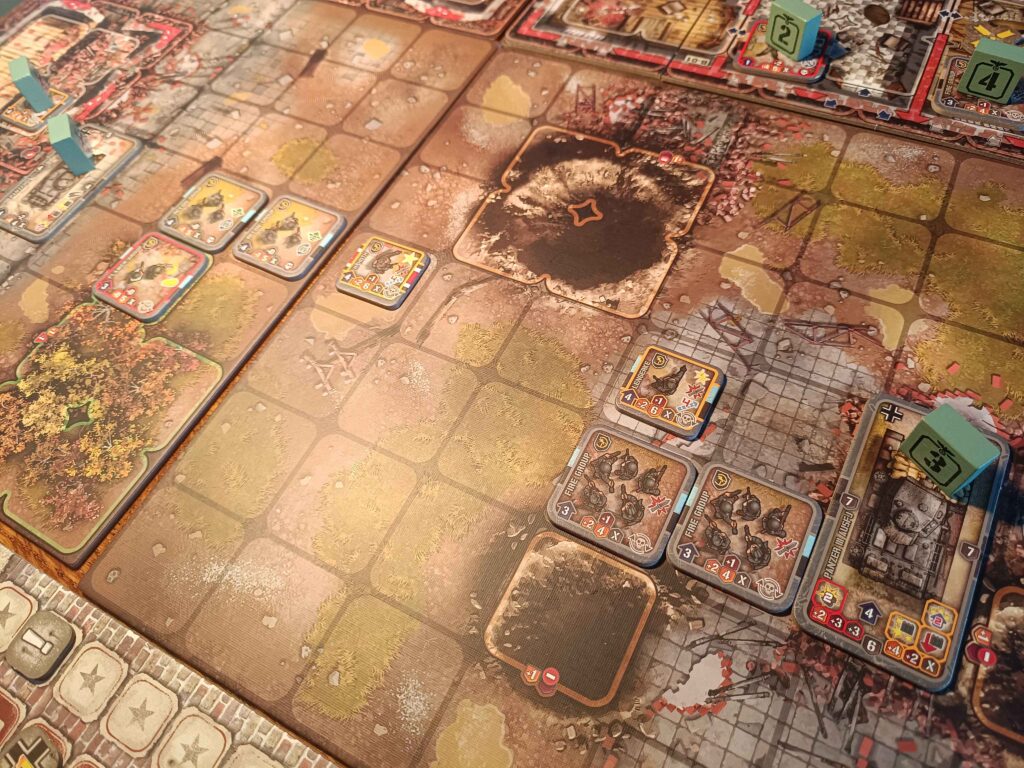
A unit is a team of infantry, an officer, or a vehicle. Once activated, it can shoot or move (including launching an assault). Vehicles with machine guns can do both! Meanwhile, units that didn’t get activated with an order get to do a free, assault-noninitiating move at the end of the turn. Simple as well as encouraging fire and maneuver.
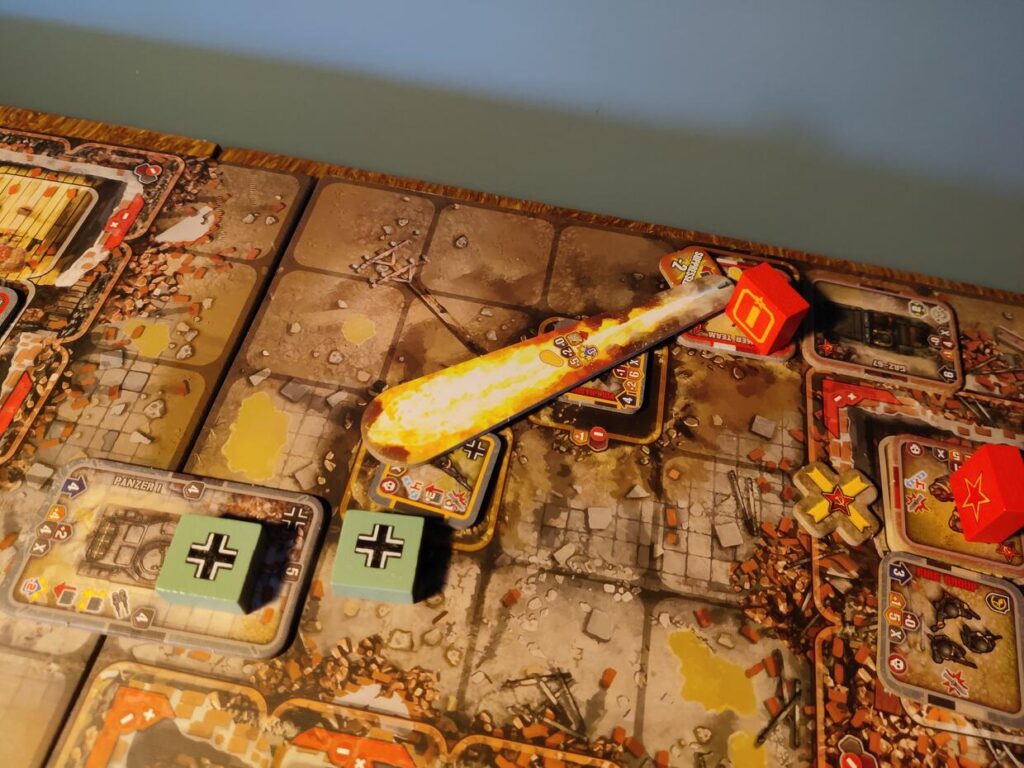
There are no saves in the game: any defenses and such are factored into hit modifiers. Heroes of Stalingrad moves fast as units other than rifle teams, heroes/officers, and AFVs can only take a single hit before dying/exploding. Rifle teams essentially have two hit points, but degrade in performance after a single hit (while also becoming harder to hit) while tonks can take system damage.
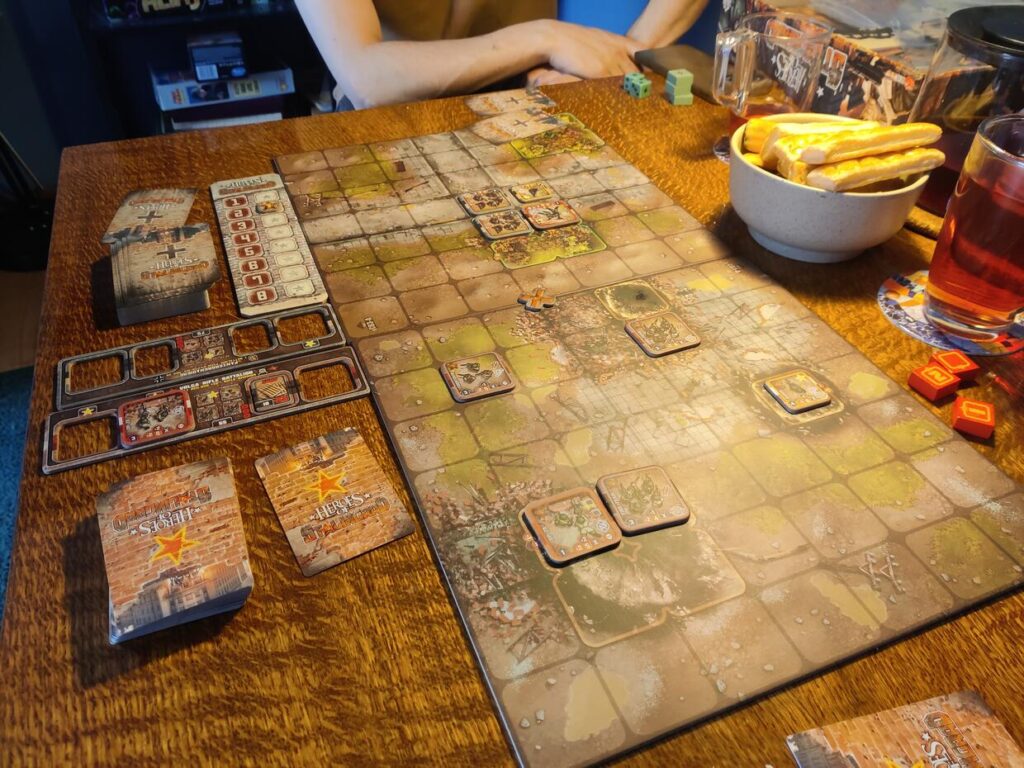
But it’s those specialist teams that have abilities that regular infantry fire teams don’t, like damaging vehicles. Even a humble LMG (and the DP-28 is really humble) can spread fire over targets or suppress units. However, fire teams are better at assaults. This places some emphasis on being aggressive with your maneuver elements while keeping your support elements safe.
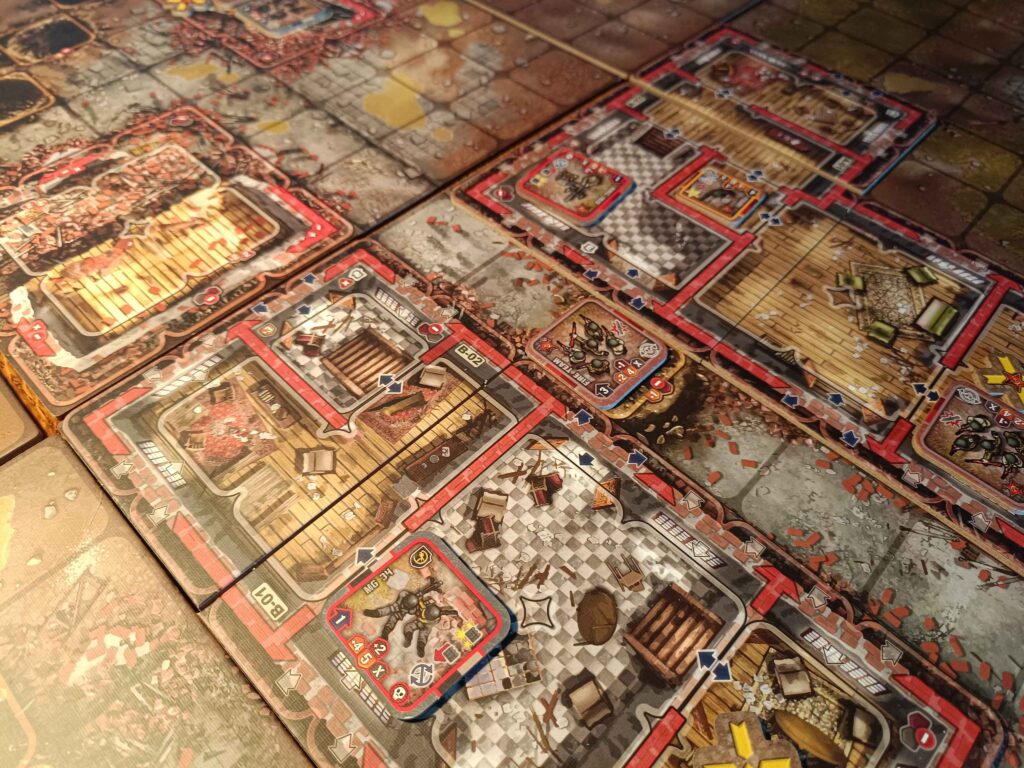
Luckily, Heroes of Stalingrad has been touched by good game design: army building is constrained. The game comes with two “battalion” recruitment tiles per side, which give you the core of your forces. Any you add to that will come in the shape of either clumps of infantry, as individual vehicles, or like consumables. Notably, this is how Soviets get more orders – they start with one (Nazis do with two) and get more by filling reinforcement slots.
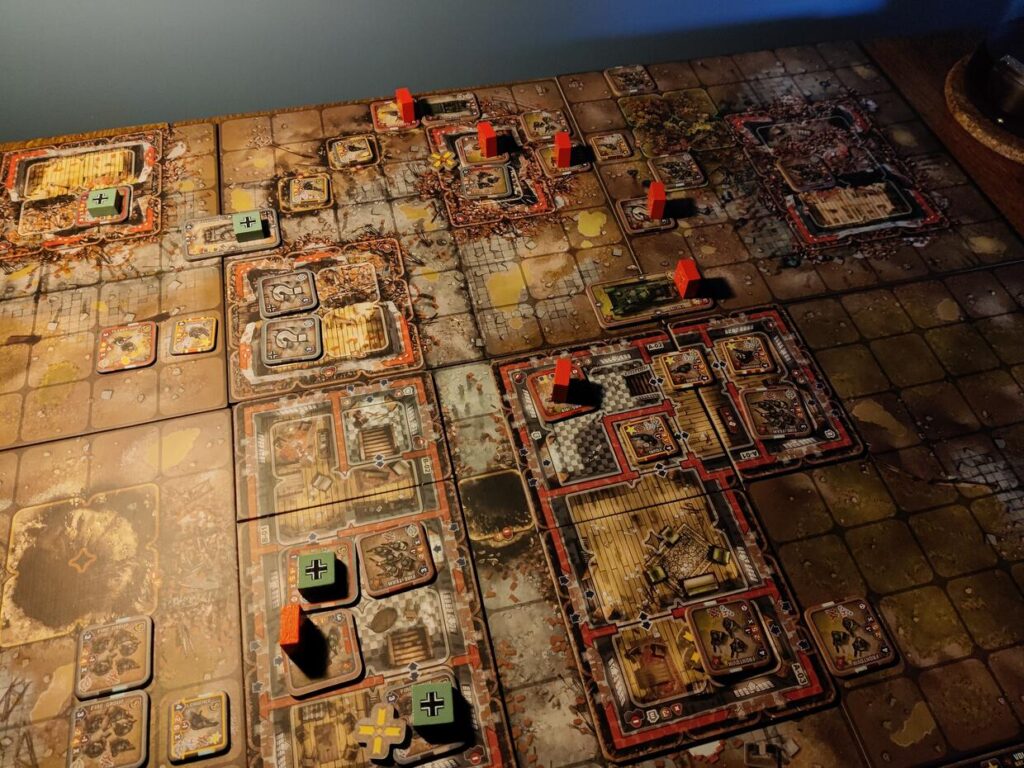
Heroes of Stalingrad is a fun, fast game of World War 2 action. It may be lacking in some Stalingrad flavor that you’d expect (tunnels, etc.) and the scenario conditions could use more testing, but it is, in general, a good time.
Weirdly flat miniatures, tho.