

Longtime listeners will know that I’m a big “1 miniature represents 1 soldier” fan. Naturally, it took the Something Awful goons mentioning Eisenhower all of twice for me to get very interested in the World War 2 wargame of commanding entire division, with battalion being the smallest unit on the table. Naturally.
Listen to the Fortified Niche episode.
Try the Counterattack on the Mius TTS module.
Try the Operation Epsom TTS module.
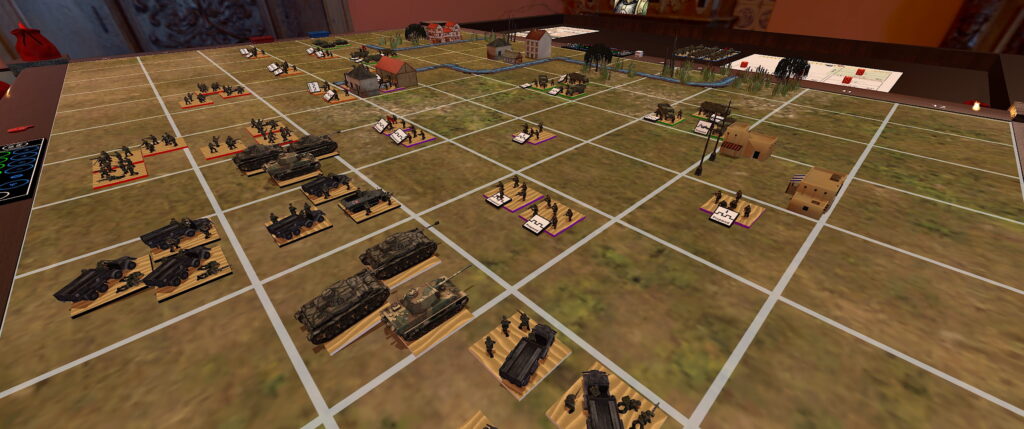
Eisenhower is played on a square-grid map with each he- square covering 3 kilometers of terrain. Yes, it is difficult not to say (type) “hex” all the time. A base represents a battalion and up to three can share a square. The unit types are split into infantry and armor. The finer sub-types – cavalry, infantry support tanks, etc. – are just variations on the base themes. It is a very elegant system than conveys the strengths and uses of different types of forces without an eye-watering amount of special rules.
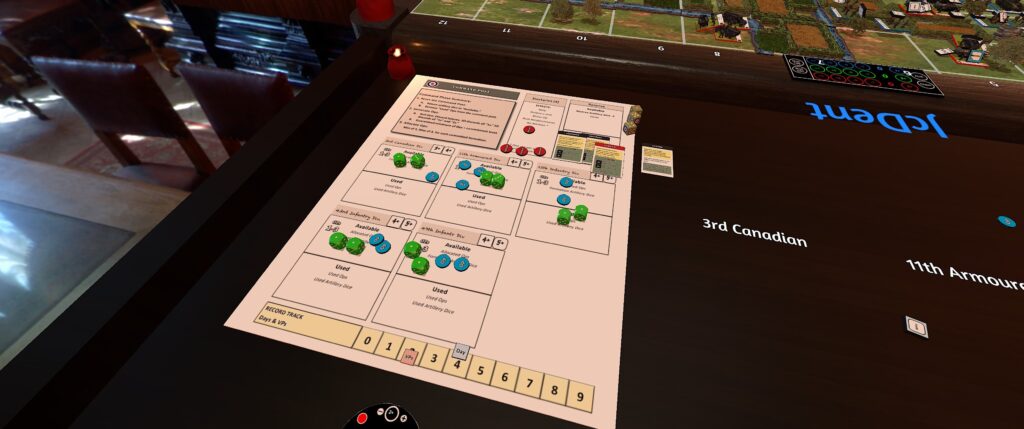
Your battalions are grouped into divisions, of which you may have up to six. At the start of the turn, each player rolls dice twice the number of their committed (read: having surviving units on the board) divisions, which will be used to determine how many Ops (activations) they’ll have. Ops are doled out to divisions, up to three per,and will be used to activate the poor bloody battalions. Oh, and many of the cards, which represent various tricks and supports (like massed air attacks) are also played at this stage.
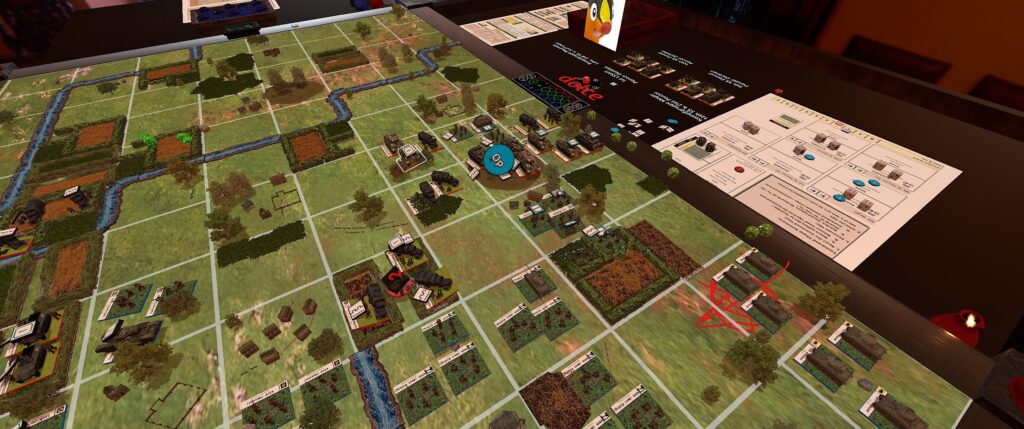
Ops are supposed to be rolled for in secret, since the defending player is technically supposed to have fewer activations while the length of the turn is dictated by the Ops that the attacker has. Yes, Eisenhower is a strictly asymmetrical game! The advantages and disadvantages each side has will start at army building (defender get a lower point allowance for units) and extend to areas like deployment and rallying capacity.
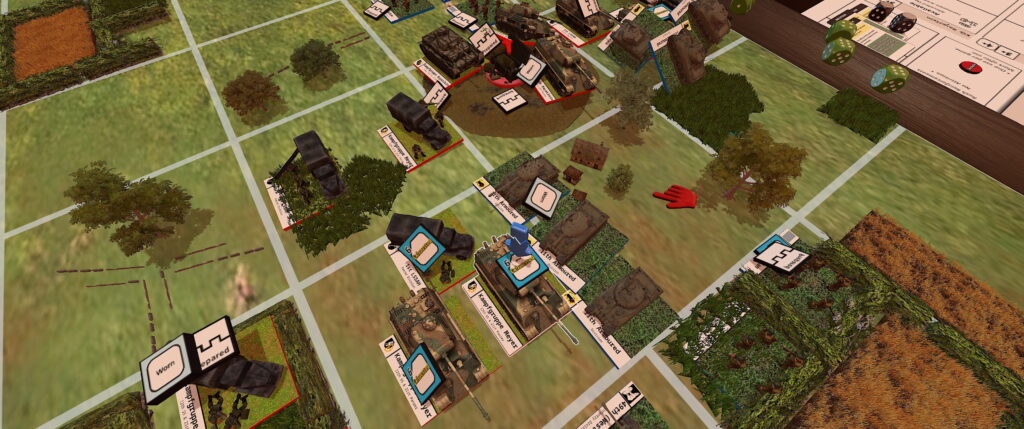
But back to Ops and units. On your round, you drop a division’s Op marker on a square empty of enemy units. You can then activate that division’s battalions in that and surrounding squares. The astute player will note that this means that concentrating units makes them easier to control. However, it also complicates traffic management, as infantry speed is one square while armor moves two. But that’s OK, movement is also attack!
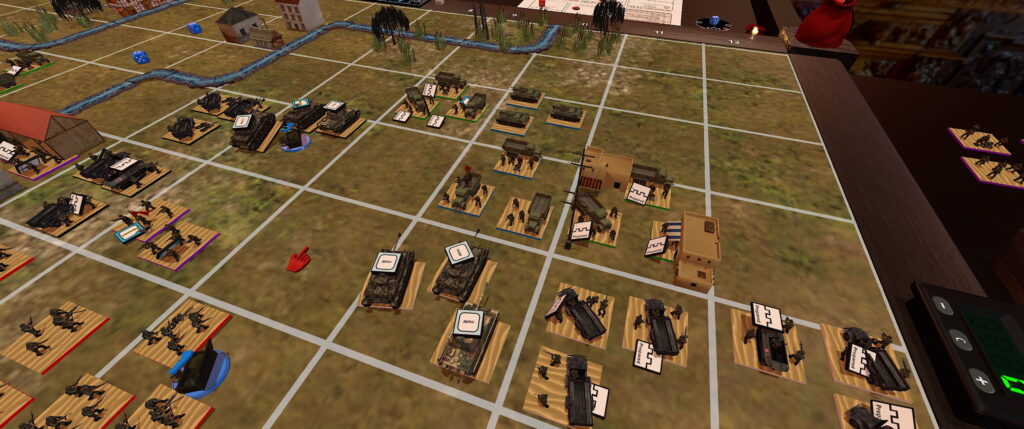
Attacking is never certain in Eisenhower, as a square can only be attacked once per Op, and if any defender remains standing at the end of the attack, the attacker must retreat. That’s why the player is encouraged to use artillery (from both the division’s own and the reserve pools), match unit types to the terrain you’re attacking into, or even bypass the unit entirely and starve them out. Throwing more men into the grinder also works.
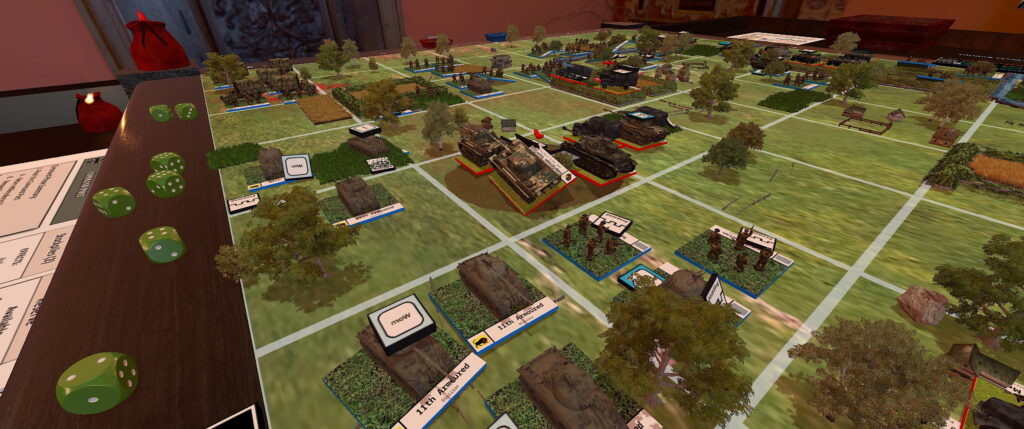
But Eisenhower isn’t a game of just straight-forward armor pushes over open fields and infantry grindfests in closed terrain. As you peer into the advanced rules, you’ll discover that the game can also do airdrops and naval landings, simulate the difficulty of crossing major rivers, or allow the defenders to man actual fortifications.
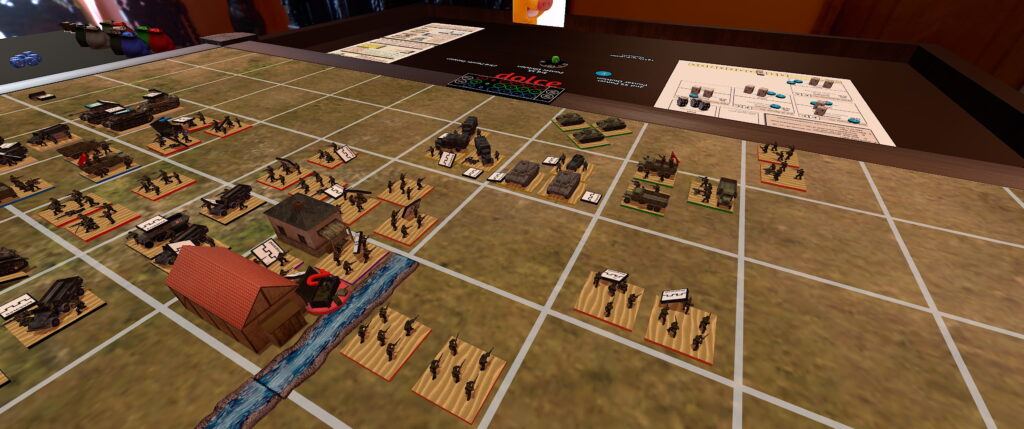
In conclusion, Eisenhower is as fast and pleasant as a game of this scale can get. Sure, there are some unanswered questions about the system – namely, what’s stopping it from being a hex-and-chit war game – but it is a very solid title. Plus, it gives you an excuse to put cute little unit labels on bases!